
0+

O książce
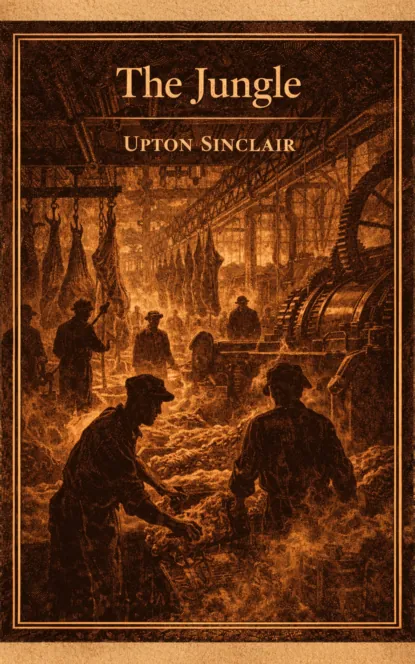
The Jungle by Upton Sinclair is a powerful and unflinching novel that exposes the harsh realities of industrial labor and the devastating impact of unchecked corporate greed in early twentieth-century America. Set against the gritty backdrop of Chicago's booming meatpacking district, this landmark work of social protest fiction reveals the human cost of exploitation and ignited a national outcry that reshaped public policy.
The story follows Jurgis Rudkus, a young Lithuanian immigrant who arrives in America full of hope and determination. Dreaming of prosperity and opportunity, Jurgis and his family settle in Chicago, believing that hard work will secure a better future. Instead, they are thrust into a brutal system that preys upon the vulnerable. Grueling hours, unsafe working conditions, meager wages, and corrupt business practices quickly erode their optimism.
Through vivid and often shocking detail, Sinclair pulls back the curtain on the unsanitary and dangerous practices within the meatpacking industry. Yet the novel is far more than an exposé of food production—it is a deeply personal account of one family's struggle to survive amid poverty, injustice, and systemic abuse. As tragedy strikes again and again, Jurgis is forced to confront the crushing realities of economic inequality and the limits of the American Dream.
Sinclair's storytelling is both emotional and political. He portrays the immigrant experience with empathy, illustrating the vulnerability of newcomers navigating a foreign language, unfamiliar laws, and predatory institutions. The novel exposes how powerful corporations manipulate laborers, silence dissent, and prioritize profit over human dignity. Through Jurgis's journey, readers witness the psychological toll of exploitation and the desperation that arises when opportunity proves to be an illusion.
As the narrative unfolds, Jurgis undergoes a profound transformation. Hardened by suffering and disillusionment, he searches for meaning and justice in a world stacked against him. His path ultimately leads him toward political awakening, as he discovers the promise of collective action and social reform. In this way, The Jungle becomes not only a story of hardship but also a call for change.
Upon its publication in 1906, the novel caused widespread public outrage, prompting government investigations and leading to major reforms in food safety laws, including the Pure Food and Drug Act and the Meat Inspection Act. Sinclair famously remarked that he aimed for the public's heart but hit its stomach—yet the book's broader message about workers' rights and economic justice remains just as significant today.
Compelling, disturbing, and profoundly influential, The Jungle stands as a cornerstone of American social reform literature. It is a searing indictment of industrial exploitation and a timeless reminder of the importance of accountability, compassion, and systemic change. Sinclair's work continues to resonate as a powerful exploration of resilience, injustice, and the enduring fight for fairness in society.