Czytaj książkę: «Bake Text Only»

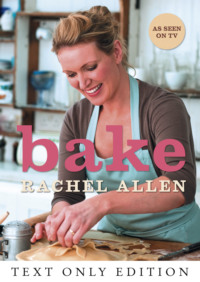
Bake
For my sister and best friend Simone
Table of Contents
Cover Page
Title Page
Dedication
Introduction
Sweet mouthfuls
Cakes
Puddings
Breads and savoury bites
Tarts and pies
Breakfast and patisserie
Baked meals
Holiday and celebration
Basic recipes and techniques
Glossary
Acknowledgements
Copyright
About the Publisher
INTRODUCTION
Baking has always been one of my greatest joys. I have such happy memories of my sister and I when we were little, standing on kitchen chairs so that we could help Mum make biscuits or buns for the family. Even today, the wonderful, warm aromas of baking bread, cakes or cookies always transport me back to these times.
Baking makes you stop and really enjoy your time in the kitchen. Of course, there is a lot more to baking than just cakes and cookies, it’s a versatile and very homely method of cooking, whether you’re baking a fresh loaf of bread or just a simple jacket potato. It’s warming, comforting and nurturing, and fills the house with such welcoming smells.
Giving something that you have baked to someone you love is real generosity—whether it be a delicious pie for friends on a cold winter’s evening or a special cake for a birthday.
There is no mystery to baking; baking is a simple science, which is precisely why it is so satisfying. Your friends may think you’re a genius if you present them with a beautiful cake, but it’s really just the right ingredients in the right quantities!
I have chosen my favourite baking recipes in this collection to give you a wide range of delicious treats and meals that can be baked in your oven. I hope these become part of your everyday life. There are also many special recipes for those once-in-a-while occasions and celebrations. If you can master a set of weighing scales, then you have all the skills you need to bake…so what are you waiting for? Get that pinny on and start baking!
Rachel
PS The oven temperatures in this book are for a conventional oven, but if I am using a fan oven, then I usually reduce the temperature by 10 per cent.
SWEET MOUTHFULS
OATMEAL AND RAISIN COOKIES
An American favourite, these cookies are moist, sweet and very moreish.
MAKES ABOUT 30 COOKIES
110g (4oz) butter, softened
110g (4oz) caster sugar
110g (4oz) soft light brown sugar
1 egg
2 tbsp water
1 tsp vanilla extract
250g (9oz) porridge oats
110g (4oz) self-raising flour
1 level tsp salt
110g (4oz) raisins
1 Preheat the oven to 180°C (350°F), Gas mark 4.
2 Cream the butter in a large bowl or in an electric food mixer until soft. Add the sugars and beat until the mixture is light and fluffy. Add the egg, water and vanilla extract while still beating. Reduce the speed and gently mix in the oats, flour, salt and raisins to form a dough.
3 Using your hands, roll the dough into walnut-sized balls and place spaced slightly apart on two baking trays (no need to grease or line).
4 Bake in the oven for 15-25 minutes or until light golden brown, but still slightly soft in the centre.
5 Allow to cool on the trays for a minute before transferring to a wire rack to cool.
VARIATION
Oatmeal and chocolate: Chocolate chips can be used instead of raisins, if you prefer.
BASIC COOKIE RECIPE
This recipe is a basis for many combinations. Experiment with ingredients—flavourings, dried fruits, nuts, spices and even herbs such as lavender—to find your favourite.
MAKES ABOUT 35 COOKIES
225g (8oz) butter, softened
110g (4oz) caster sugar
275g (10oz) plain flour
Ground spices or finely grated zest (optional; see Variations below)
1 Preheat the oven to 170°C (325°F), Gas Mark 3.
2 Cream the butter in a large bowl or in a food mixer until soft. Add the sugar and beat until the mixture is light and fluffy.
3 Sift in the flour and spices or grated zest (if using) and bring the mixture together to form a dough.
4 Using your hands, roll the dough into walnut-sized balls and place them slightly apart on a baking tray (no need to grease or line). Flatten them slightly with the back of a damp fork and bake in the oven for 13-15 minutes or until they are light golden brown and slightly firm on top.
5 Carefully transfer the cookies to a wire rack to cool.
VARIATIONS
Poppy seed: Add 2 tablespoons of poppy seeds to the flour.
Lemon: Add the finely grated zest of 1 lemon to the flour.
Orange: Add the finely grated zest of 1 orange to the flour.
White chocolate and orange: Dip the tops of the orange cookies in 50g (2oz) melted white chocolate, then allow to set on greaseproof paper.
Spices (cinnamon, mixed spice, ginger): Add 1 teaspoon of a ground spice to the flour.
Crystallised ginger and dark chocolate: Add 25g (1oz) finely chopped crystallised ginger to the flour. When the cookies are baked and cooled, dip the tops in 50g (2oz) melted dark chocolate, then allow to set on greaseproof paper.
Double chocolate chip: Use 250g (9oz) plain flour and add 50g (2oz) sifted cocoa powder to the flour. Bring the dough together and mix in 125g (4½oz) dark or white chocolate chips.
White chocolate and dried cranberry: Add 50g (2oz) chopped dried cranberries to the flour. When the cookies are baked and cooled, dip the tops in 50g (2oz) melted white chocolate and allow to set on greaseproof paper.
RACHEL’S BAKING TIPS
*Roll leftover dough into a log shape, 2-3cm (¾-1¼in) in diameter, then leave in the fridge for up to 2 weeks, or freeze for up to a couple of months. To bake, cut off slices, about 1cm (½in) thick, and cook on a baking tray in a preheated oven.
*Always remove cookies from their baking trays while still warm otherwise they will stick.
GERMAN SPICE AND HAZELNUT COOKIES
The fragrant spices in these cookies make them a delicious and aromatic treat.
MAKES 25-30 COOKIES
125g (4½oz) butter, softened
80g (3½oz) soft light brown sugar
1 egg, lightly beaten
1 tsp vanilla extract
200g (7oz) plain flour
½ tsp bicarbonate of soda
¼ tsp freshly grated nutmeg
¼ tsp mixed spice
1 dsp caster sugar
1 dsp ground cinnamon
25g (1oz) hazelnuts, roughly chopped
1 Preheat the oven to 180°C (350°F), Gas mark 4.
2 Cream the butter in a large bowl or a food mixer until soft. Add the brown sugar and beat together again until light and fluffy. Beat in the egg and vanilla extract until combined.
3 Sift in the flour, bicarbonate of soda and spices and gently bring the mixture together to form a dough. Wrap the dough in cling film and allow it to chill in the fridge for 30 minutes.
4 Mix the caster sugar and cinnamon in a medium-sized bowl. Roll the dough into walnut-sized balls and toss in the sugar and cinnamon. Place on baking trays (no need to grease or line) about 7cm (2¾in) apart and sprinkle with the hazelnuts. Bake for 15 minutes, or until golden and firm at the edges.
5 Leave for 2 minutes, then transfer to a wire rack to cool.
OAT AND VANILLA SHORTBREAD COOKIES
The oats give these cookies a wonderful crumbly texture in this delicious variation on the classic shortbread biscuit.
MAKES ABOUT 40 COOKIES
200g (7oz) butter, softened
100g (3½oz) icing sugar, sifted
1 tsp vanilla extract
200g (7oz) plain flour
½ tsp baking powder
100g (3½oz) porridge oats
Caster sugar, for sprinkling
1 Preheat the oven to 180°C (350°F), Gas mark 4.
2 Cream the butter in a large bowl or in an electric food mixer until soft. Add the icing sugar and vanilla extract and beat until the mixture is light and fluffy.
3 Sift in the flour and baking powder, then stir in the oats and bring the mixture together to form a dough.
4 Using a sheet of cling film to cover the dough, roll it into a log about 30cm (12in) long and 6cm (2½in) in diameter. Allow to chill in the fridge, covered in the cling film, for about 30 minutes until firm.
5 Remove the cling film, slice the log into rounds about 5mm (¼in) thick and place slightly apart on a baking tray lined with parchment paper. Bake in the oven for 15 minutes or until light golden brown and dry to the touch.
6 Carefully transfer the cookies to a wire rack to cool.
CHOCOLATE AND COCONUT BARS
These crunchy, chocolatey treats are perfect for picnics and parties.
MAKES 16 BARS
225g (8oz) butter, softened
150g (5oz) golden caster sugar
150g (5oz) desiccated coconut
75g (3oz) crushed cornflakes (I do this in a bag with a rolling pin)
Pinch of salt
150g (5oz) self-raising flour, sifted
25g (1oz) cocoa powder, sifted
175g (6oz) good-quality dark chocolate
18 × 28cm (7 × 11in) Swiss roll tin
1 Preheat the oven to 180°C (350°F), Gas mark 4. Butter or line the Swiss roll tin with greaseproof paper.
2 Cream the butter in a large bowl or in an electric food mixer until soft. Add the sugar and beat until the mixture is light and fluffy. Add the coconut, cornflakes and salt, then gradually add the sifted flour and cocoa powder and bring the mixture together to form a fairly dry dough.
3 Place the dough in the prepared Swiss roll tin and spread it out evenly (I sometimes place a layer of cling film over it and roll it with a rolling pin or empty jam jar).
4 Remove the cling film and bake in the oven for 20 minutes or until dry to the touch. Allow to cool in the Swiss roll tin.
5 Melt the chocolate in a heatproof bowl set over a saucepan of simmering water, then spread over the cooled biscuit base in the tin. Place somewhere cool (preferably not in the fridge) until the chocolate has hardened, then cut into bars.
GINGER AND HONEY SNAPS
For a variation on the classic ginger biscuit, these are the perfect accompaniment to a mid-morning cuppa.
MAKES ABOUT 20 COOKIES
225g (8oz) self-raising flour
2 tsp bicarbonate of soda
Pinch of salt
1 tsp ground ginger
1 tsp mixed spice
½ tsp ground cinnamon
100g (3½oz) caster sugar, plus 1 tbsp extra, for sprinkling
125g (4½oz) butter, cubed
100g (3½oz) runny honey
1 Preheat the oven to 180°C (350°F), Gas mark 4. Grease a large baking tray with vegetable oil.
2 Sift the flour, bicarbonate of soda, salt and spices into a large bowl, add the 100g (3½oz) sugar and mix well. Add the butter and, using your fingertips, rub it into the flour until the mixture resembles breadcrumbs.
3 Heat the honey gently in a small saucepan, then pour it into the flour and butter mixture and bring together to form a dough using a wooden spoon.
4 Sprinkle the 1 tablespoon of caster sugar over a plate. Using floured hands, roll the dough into small balls, then roll in the caster sugar and place on the greased baking tray about 5cm (2in) apart. Flatten down with the back of a damp fork and bake in the oven for 10-12 minutes or until they are medium brown. If the cookies are too dark, they will taste bitter.
5 Leave on the baking tray for 2 minutes before carefully transferring to a wire rack to cool.
RACHEL’S BAKING TIP
*To make fresh cookies a couple of days later, you can roll some or all of the mixture into a sausage shape, wrap tightly in cling film and allow to chill in the fridge. Remove from the fridge 30 minutes before cooking. Cut off pieces of dough, roll them in your hands, then in the caster sugar and bake as above. They won’t be as big but they are still delicious!
LITTLE PECAN PUFFS
These buttery and crumbly little morsels are tossed in icing sugar so they look like small puffy clouds—hence their name!
MAKES ABOUT 48 PUFFS
110g (4oz) shelled pecans
110g (4oz) butter, softened
50g (2oz) caster sugar
1 tsp vanilla extract
110g (4oz) plain flour, sifted
25g (1oz) icing sugar, sifted, plus extra for dusting
1 Preheat the oven to 150°C (300°F), Gas mark 2.
2 Place the pecans in a food processor and grind until quite fine.
3 Cream the butter in a large bowl or in an electric food mixer until soft. Add the sugar and vanilla extract and beat until the mixture is light and fluffy. Add the ground pecans and flour and bring together to form a dough.
4 Using your hands, roll the dough into small, marble-sized balls, then flatten slightly using the palm of your hand and place on a baking tray (no need to grease or line).
5 Bake in the oven for 40 minutes or until they are a very pale golden brown and slightly firm around the edges.
6 Sift the icing sugar into a shallow bowl or onto a large plate. Allow the cookies to cool for 2 minutes, then carefully remove them from the tray and, while they are still hot, roll them in the sifted icing sugar.
7 Allow to cool on a wire rack, then dust generously with more icing sugar.
BAKEWELL BARS
I love the classic combination of light almond sponge and buttery shortbread, sandwiched together with a tasty layer of raspberry jam. You can use any type of jam you wish, of course—apricot would make a delicious alternative in this recipe. You can also double the quantity to fit into a 23 × 30cm (9 × 12in) Swiss roll tin.
MAKES 12 BARS
75g (3oz) butter, softened
25g (1oz) caster sugar
1 egg yolk
175g (6oz) plain flour, plus extra for dusting
Half a jar (approximately 200g/7oz) raspberry jam (or make your own)
For the topping
100g (3½oz) butter, melted and cooled slightly
2 eggs, beaten
A few drops of almond essence
100g (3½oz) ground almonds
100g (3½oz) semolina
100g (3½oz) caster sugar
Flaked almonds, for sprinkling
20 × 20cm (8 × 8in) square cake tin
1 Preheat the oven to 180°C (350°F), Gas mark 4. Butter the sides of the cake tin and line the base with greaseproof paper.
2 First, make the biscuit base. Cream the butter in a large bowl or in an electric food mixer until soft. Add the sugar and beat until the mixture is light and fluffy. Add the egg yolk and mix well, then sift in the flour and mix together to form a dough.
3 Roll the pastry out on a lightly floured work surface to the right size to fit the base of the tin and then press into the prepared tin. Spread the raspberry jam over the top, then allow to chill in the fridge while you make the topping.
4 Place the melted butter in a bowl, add the beaten eggs and almond essence and mix well. Stir in the ground almonds, semolina and caster sugar.
5 Take the tin out of the fridge and spread the almond dough over the jam, being careful not to mess up the jam too much. (I usually place the almond dough in dots over the jam, then join it all together using the back of a spoon.)
6 Sprinkle the top with the flaked almonds and bake in the oven for about 25-30 minutes or until golden and set in the centre. Allow to cool in the tin, then cut into fingers.
ALMOND AND ORANGE BUTTER FINGERS
These lovely old-fashioned, shortbread-like biscuits are moist and crumbly, with a citrus zing.
MAKES ABOUT 32 FINGERS
225g (8oz) butter, softened
125g (4½oz) caster sugar
1 tsp finely grated orange zest
110g (4oz) plain flour
175g (6oz) ground almonds
Flaked almonds, for sprinkling
1 Preheat the oven to 170°C (325°F), Gas mark 3.
2 Cream the butter in a large bowl or in an electric food mixer until soft. Add the sugar and orange zest and beat until the mixture is light and fluffy. Sift in the flour then stir in the ground almonds and bring the mixture together to form a dough.
3 Using your hands, roll the dough into walnut-sized balls and form into oval shapes. Sprinkle with the flaked almonds, making sure they are well dispersed and pressed in. Transfer to a plate and allow to chill in the fridge for 20 minutes.
4 Place the fingers slightly spaced apart on a large baking tray (no need to grease or line) and bake in the oven for 15 minutes or until light golden brown.
5 Carefully transfer the fingers to a wire rack to cool.
SNICKERDOODLES
A somewhat soft and cakey biscuit with a spicy, autumnal flavour.
MAKES ABOUT 26 BISCUITS
125g (4½oz) butter, softened
110g (4oz) caster sugar, plus 1 dsp extra, for rolling
1 egg, lightly beaten
1 tsp vanilla extract
250g (9oz) plain flour
½ tsp freshly grated nutmeg
¾ tsp baking powder
Pinch of salt
1 dsp ground cinnamon
1 Preheat the oven to 180°C (350°F), Gas mark 4.
2 Cream the butter in a large bowl or in an electric food mixer until soft. Add the 110g (4oz) caster sugar and beat until the mixture is light and fluffy. Beat in the egg and vanilla extract until combined.
3 Sift in the flour, nutmeg, baking powder and salt and gently mix together to form a dough.
4 Mix the dessertspoon of sugar and the cinnamon together in a medium-sized bowl. Using your hands, roll the dough into walnut-sized balls then roll in the sugar and cinnamon mixture and place on two baking trays (no need to grease or line), each ball spaced about 3cm (1¼in) apart. Flatten them down with the palm of your hands.
5 Bake in the oven for about 15 minutes, or until they feel firm around the edges.
6 Allow to stand for 2 minutes on the baking trays, then carefully transfer to a wire rack to cool.
DATE BARS
We used to make these sticky sweet bars when I worked in a food shop in Vancouver. They’re great for a little afternoon pick-me-up and much better than any bought variety. They are perfect for lunchboxes, too, and will keep very fresh in an airtight box for up to a week. They can also be frozen.
MAKES 16 BARS
250ml (9fl oz) water
200g (7oz) dates (stoned weight), chopped
175g (6oz) plain flour
½ tsp bicarbonate of soda
175g (6oz) soft light brown sugar
100g (3½oz) porridge oats
Good pinch of salt
175g (6oz) butter, diced
20 x 20cm (8 x 8in) square cake tin
1 Preheat the oven to 180°C (350°F), Gas mark 4. Butter the sides of the cake tin and line the base with greaseproof paper.
2 Place the water and chopped dates in a medium-sized saucepan and bring up to a simmer. Cook for about 10 minutes, uncovered, on a low-medium heat until the date mixture is very soft and thick, stirring occasionally. Remove from the heat and allow to cool to room temperature.
3 Sift the flour and bicarbonate of soda into a large bowl. Add the sugar, oats and salt and mix well. Add the butter and, using your fingertips, rub it in until moist clumps form.
4 Press half of the oat mixture evenly over the base of the prepared tin. Spread the cooked date mixture over this, then sprinkle with the remaining oat mixture. Press gently with the palm of your hand to flatten it on top.
5 Bake in the oven for approximately 40 minutes or until golden brown at the edges and set in the centre.
6 Allow to cool completely in the tin, then cut into bars and serve.
PEANUT BUTTER AND WHITE CHOCOLATE BLONDIES
Tired of brownies? Try blondies! These little squares are great on their own; eaten with ice cream they are simply sinful.
MAKES 12 SMALL SQUARES
125g (4½oz) plain flour
1 tsp baking powder
100g (3½oz) butter, softened
150g (5oz) crunchy peanut butter
175g (6oz) soft light brown sugar
1 egg, beaten
1 tsp vanilla extract
75g (3oz) white chocolate, chopped
20 x 20cm (8 x 8in) square cake tin
1 Preheat the oven to 170°C (325°F), Gas mark 3. Butter the sides of the cake tin and line the base with greaseproof paper.
2 Sift the flour and baking powder into a small bowl and set aside.
3 In a large bowl, cream the butter and peanut butter together until very soft. Add the sugar, egg and vanilla extract and beat until combined. Add the flour, baking powder and the chopped chocolate and mix to form a dough.
4 Place the dough in the prepared tin and bake in the oven for 25-30 minutes or until golden brown and almost firm in the centre.
5 Allow to cool in the tin, before removing and cutting into squares.
CARROT AND PECAN SQUARES
These are denser and richer than Carrot Cake. The recipe uses a classic cream cheese icing, but the cakes are equally good un-iced.
MAKES 16 SQUARES
175g (6oz) wholemeal self-raising flour
½ tsp salt
3 tsp baking powder
1 tsp mixed spice
1 tsp ground ginger
50g (2oz) raisins (optional)
150ml (¼ pint) sunflower oil
150g (5oz) soft light brown sugar
3 eggs
1 tsp vanilla extract
225g (8oz) carrot, finely grated
50g (2oz) shelled pecans, chopped, plus 25g (1oz) for sprinkling
1 x quantity cream cheese icing
20 x 20cm (8 x 8in) square cake tin
1 Preheat the oven to 180°C (350°F), Gas mark 4. Butter the sides of the cake tin and line the base with greaseproof paper.
2 Sift the flour, salt, baking powder and spices into a large bowl. Add the raisins (if using) and mix well.
3 Whisk the oil, brown sugar, eggs, vanilla extract, grated carrot and chopped pecans in a separate bowl, then mix in the flour and spice mixture. Spoon into the prepared tin and bake in the oven for 25-30 minutes, or until springy to the touch and a skewer, when inserted in the centre, comes out clean.
4 Allow to cool, then remove from the tin and place on a serving plate.
5 Make the cream cheese icing, then, using a palette knife or back of a spoon, spread the icing onto the cooled cake. Sprinkle with additional chopped pecans and cut into squares to serve.
LIGHT SWEET SCONES
My friend Oisin makes these divine scones. He uses a very light Italian flour, but you can use plain flour if you wish.
MAKES 10-12 SCONES
500g (1lb 2oz) light Italian or plain flour
1 rounded tsp bicarbonate of soda
2 rounded tsp cream of tartar
1 tsp sea salt
125g (4½oz) unsalted cold butter, cubed (if you are using salted butter, decrease the salt to ½ tsp)
25g (1oz) caster sugar
1 egg, beaten
275ml (9fl oz) buttermilk or milk, plus extra for the egg wash
50g (2oz) caster or granulated sugar (optional)
6cm (2½in) cutter
1 Preheat the oven to 220°C (425°F), Gas mark 7.
2 Sift the flour, bicarbonate of soda, cream of tartar and salt into a large bowl. Using your fingertips, rub in the butter until the mixture resembles breadcrumbs. Add the sugar and mix well.
3 Set aside about a third of the beaten egg and combine the rest with the buttermilk, then add to the flour mixture and mix briefly to combine into a moist dough. Place on a lightly floured work surface and knead ever so slightly to bring together, then press or roll out to a thickness of 2cm (¾in).
4 Using the cutter, cut out approximately 12 scones and place on a floury baking tray. Add about a teaspoon or so of buttermilk to the remainder of the beaten egg to make an egg wash.
5 Brush the scones with the egg wash (and dip the tops in sugar if you wish) and bake in the oven for 10-12 minutes or until golden brown on top. Eat as soon as possible!
VARIATIONS
Cinnamon: Add 2 teaspoons of ground cinnamon to the flour.
Orange: Add the finely grated zest of 1 orange to the flour.
Chocolate chip: Add 100g (3½oz) of dark or milk chocolate chips (or chopped chocolate) to the dry ingredients before you add the liquid.
Sultana or raisin: Add 100g (3½oz) of sultanas or raisins to the dry ingredients before you add the liquid. I also sometimes add 100g (3½oz) dried cranberries or dried blueberries instead of the sultanas.
CINNAMON PECAN BUNS
These sweet, buttery and nutty treats are delicious with a cup of tea or coffee. Normally made with a yeast-risen dough, the buns in this recipe are made using a slightly faster method.
MAKES 12 BUNS
For the filling
100g (3½oz) butter, softened
1 tsp ground cinnamon
100g (3½oz) soft light brown sugar
100g (3½oz) toasted pecans, chopped (see Rachel’s baking tips opposite)
For the dough
375g (13oz) plain flour
1 tsp baking powder
1 tsp ground cinnamon
25g (1oz) caster sugar
50g (2oz) butter, softened
1 egg, beaten
200ml (7fl oz) milk
For the icing
75g (3oz) icing sugar
1½-2 tbsp boiling water
25cm (10in) diameter cake tin
1 Preheat the oven to 230°C (450°F), Gas mark 8, and butter and flour the cake tin.
2 First, make the filling. Cream the butter and cinnamon together in a large bowl or in an electric food mixer until soft. Add the brown sugar and beat until the mixture is light and fluffy and then stir in the chopped toasted pecans. Set aside (not in the fridge).
3 Next, make the dough. Sift the flour, baking powder and cinnamon together into a large bowl. Add the caster sugar, then add the butter and, using your fingertips, rub it in until the mixture resembles breadcrumbs. Whisk the beaten egg and milk together in a separate bowl, then make a well in the centre of the dry ingredients and pour in most of the liquid (all but 60ml/2fl oz). Using one hand with your fingers outstretched like a claw, move your hand around in one direction (clockwise or anti-clockwise) until the dough comes together. You may need to add the rest of the milk as the dough should be soft and a little sticky.
4 To make the buns, tip the dough out onto a floured work surface and dust with flour. Using a rolling pin, roll out the dough until it is a 35 x 25cm (14 x 10in) rectangle and about 2cm (¾in) thick.
5 Spread the filling all over the rectangle, then with the widest end facing you, roll up the dough away from you so that it resembles a Swiss roll. Cut the ‘log’ 11 times to make 12 slices, each 3cm (1¼in) thick. Place the pieces cut side facing up, with a tiny bit of space between each ‘swirl’, in the prepared cake tin.
6 Bake in the oven for 10 minutes, then reduce the oven temperature to 200°C (400°F), Gas mark 6 and cook for a further 25-35 minutes or until risen, golden brown and cooked in the centre. They should have joined together to make a lovely cluster of buns.
7 Allow to stand in the tin for 2-3 minutes before carefully turning out and cooling on a wire rack. When cool, transfer to a serving plate or cake stand.
8 To make the icing, sift the icing sugar into a bowl, add 1 tablespoon of boiling water and mix well, adding another ½-1 tablespoon of boiling water if necessary, until the icing is soft but not too runny. Drizzle the icing over the buns. To serve, break each bun off with your hand or cut into slices.
VARIATION
Cinnamon scones: Instead of rolling up the dough and cutting it, you could make simple cinnamon scones. Roll the dough out until it is about 3cm (1¼in) thick, then cut into ten squares or rounds, each about 6cm (2½in) in diameter. Brush the tops with beaten egg, then dip the wet top into crunchy granulated sugar so that they are covered in an even layer. Place on a baking tray and bake in a preheated oven at 230°C (450°F), Gas mark 8 for about 10-15 minutes or until golden on top and sounding hollow when tapped on the base. Allow to cool then split in half and serve with the cinnamon pecan filling spread on each half.
RACHEL’S BAKING TIPS
* To toast the pecans, roughly chop them and then spread out on a baking tray and cook in a preheated oven at 230°C (450°F), Gas mark 8 for 4 minutes. Allow to cool before using.
* To reduce the cooking time, place the buns on a baking tray, spacing them further apart than in step 5. Bake for 12-15 minutes until golden on top and firm at the edges.
ECCLES CAKES
An Eccles cake is a small, round cakey biscuit made with puff pastry, filled with currants, sugar and spices and topped with crunchy demerara sugar. They are named after the town of Eccles, near Manchester, where they have been made for the last 250 years!
MAKES ABOUT 24 CAKES
300g (11oz) good-quality bought or homemade puff or flaky pastry
1 egg, beaten
For the filling
40g (1½oz) butter, melted
75g (3oz) currants
75g (3oz) soft light or dark brown sugar
40g (1½oz) mixed peel, chopped
Finely grated zest of 1 orange
½ tsp ground cinnamon
¼ tsp freshly grated nutmeg
For the top
About 2 tbsp milk
About 2 tbsp demerara sugar
1 Preheat the oven to 200°C (400°F), Gas mark 6.
2 Mix all the ingredients together for the filling and set aside.
3 On a lightly floured work surface, roll out the pastry to a thickness of 2-3mm (1/16-⅛in) and cut into 8cm (3¼in) discs. Bring the pastry scraps together and roll them out too.
4 Place 1 teaspoon of the filling in the centre of each disc. Lightly brush the edges with beaten egg or water and bring the edges together into the centre, ‘wrapping up’ the filling. Turn the disc over, seam side down, and flatten it slightly with the rolling pin until it is about 5cm (2in) in diameter.
5 Brush the tops with milk, then sprinkle with demerara sugar (you can dip the tops in the sugar, if you wish). Make three incisions with a knife, about 1cm (½in) long, and place the cakes on a baking tray (no need to grease or line), spaced slightly apart to allow room for spreading.
6 Bake in the oven for 10-12 minutes or until golden brown. The currants and sugar caramelise through the holes in the top of the little cakes. Carefully transfer to a wire rack to cool.
VARIATIONS
Mincemeat: Replace the filling with mincemeat. Place 1 teaspoon in each disc and continue as above.
Orange and almond puffs: Replace the filling with 1 small beaten egg, 100g (3½oz) ground almonds, 50g (2oz) caster sugar and the finely grated zest of 1 orange. Mix together and continue as above.
LEMON CUPCAKES
I love these zesty little treats with an afternoon cup of tea.
MAKES 12 CUPCAKES
125g (4½oz) butter, softened
125g (4½oz) caster sugar
Finely grated zest of ½ large lemon (keeping the zest of the remaining ½ lemon for the lemon icing—see below)
2 eggs, beaten
150g (5oz) plain flour
¼ tsp baking powder
For the lemon butter icing
75g (3oz) butter, softened
175g (6oz) icing sugar, sifted
Finely grated zest of ½ large lemon
1-2 tsp freshly squeezed lemon juice
12 crystallised flowers (optional; or make your own)
12-hole fairy cake tin
1 Preheat the oven to 180°C (350°F), Gas mark 4. Line a 12-hole fairy cake tin with 12 paper cases.
2 Cream the butter in a large bowl or in an electric food mixer until soft. Add the sugar and grated lemon zest and beat until the mixture is light and fluffy. Gradually add the beaten eggs, then sift in the flour and baking powder and fold into the mixture. Alternatively, whiz all the ingredients together in an electric food mixer.
3 Divide the mixture between the paper cases and bake in the preheated oven for 7-10 minutes, until risen and golden. When cooked, the centre of each cake should be slightly springy to the touch. Remove the cakes from the tin and place on a wire rack to cool before you ice them.
4 To make the lemon butter icing, cream the butter in a bowl with a wooden spoon or hand-held electric beater until very soft. Gradually add the icing sugar and beat into the butter, along with the lemon zest and enough lemon juice to soften the icing to a spreadable consistency.
5 When the cupcakes are cool, spread a generous heaped teaspoon of lemon butter icing over the top of each one. Decorate with the crystallised flowers (if using).
FAIRY CAKES
These are the prettiest little cakes for a birthday party or just for a special treat; they are also known as butterfly buns.
MAKES 24 MINI OR 12 MEDIUM-SIZED FAIRY CAKES
125g (4½oz) butter, softened
125g (4½oz) caster sugar
1 tsp vanilla extract
2 eggs
150g (5oz) plain flour
¼ tsp baking powder
For the filling
100ml (3½fl oz) raspberry or strawberry jam (or make your own)
200ml (7fl oz) crème chantilly) or vanilla buttercream icing
Icing sugar, for dusting
Dragées (metallic sugared balls), to decorate (optional)
12-hole fairy cake tin
1 Preheat the oven to 190°C (375°F), Gas mark 5. Line a 12-hole fairy cake tin, or a 24-hole tin for mini cakes, with 12 (or 24) paper cases.
2 Cream the butter in a large bowl or in an electric food mixer until soft. Add the sugar and vanilla extract and beat until the mixture is light and fluffy.
3 Add the eggs, one at time, beating continuously, then sift in the flour and baking powder. (If you are pushed for time, and the butter is sufficiently soft, put the butter, sugar, eggs, vanilla, flour and baking powder into an electric food mixer and briefly whiz just until the mixture comes together.)
4 Divide the mixture evenly between the paper cases using two teaspoons for mini cakes or two dessertspoons for larger ones. Cook in the oven for 8-12 minutes, or until golden and springy to the touch. (The mini cakes may take just 5 minutes.) Transfer the cakes to a wire rack to cool.
5 When cooled, cut the top off each cake, then cut the tops in half to make the butterfly wings. Set aside. Spread half a teaspoon or so of jam on the top of the cut cake, then spoon or pipe the crème chantilly or buttercream on top of the jam. Arrange two butterfly wings at an angle on top of each cake. Dust generously with icing sugar and decorate with dragées, if using.
Darmowy fragment się skończył.