Czytaj książkę: «The Murder Pit»
MICK FINLAY was born in Glasgow but left when he was a child, living in Canada and then England. Before becoming an academic, he ran a market stall on Portobello Road, and has worked as a tent-hand in a travelling circus, a butcher’s boy, a hotel porter, and in various jobs in the NHS and social services. He teaches in a Psychology Department, and has published research on political violence and persuasion, verbal and non-verbal communication, and disability. He now lives in Brighton with his family.
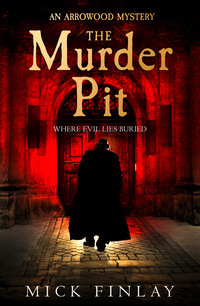
The Murder Pit
Mick Finlay

ONE PLACE. MANY STORIES
Copyright
An imprint of HarperCollins Publishers Ltd
1 London Bridge Street
London SE1 9GF
First published in Great Britain by HQ in 2018
Copyright © Mick Finlay 2018
Mick Finlay asserts the moral right to be identified as the author of this work.
A catalogue record for this book is available from the British Library.
This novel is entirely a work of fiction. The names, characters and incidents portrayed in it are the work of the author’s imagination. Any resemblance to actual persons, living or dead, events or localities is entirely coincidental.
All rights reserved under International and Pan-American Copyright Conventions. By payment of the required fees, you have been granted the non-exclusive, non-transferable right to access and read the text of this e-book on-screen. No part of this text may be reproduced, transmitted, downloaded, decompiled, reverse engineered, or stored in or introduced into any information storage and retrieval system, in any form or by any means, whether electronic or mechanical, now known or hereinafter invented, without the express written permission of HarperCollins.
Ebook Edition © January 2019 ISBN: 9780008214777
Note to Readers
This ebook contains the following accessibility features which, if supported by your device, can be accessed via your ereader/accessibility settings:
Change of font size and line height
Change of background and font colours
Change of font
Change justification
Text to speech
Praise for Arrowood
‘Arrowood is a flawed but engaging hero and the plot spins from peril to twist and back with real panache.’
The Times
‘A fantastic creation.’
The Spectator
‘Richly inventive.’
Daily Telegraph
‘Strongly reminiscent of Robert Galbraith’s Cormoran Strike novels…a memorable detective who can stand among the best.’
Harrow Times
‘Mick Finlay’s atmospheric, detailed, singular London is a terrifying place I hope to return to again and again.’ Ross Armstrong, bestselling author of The Watcher
‘If you ever thought the Sherlock Holmes stories might benefit from being steeped in gin, caked in grime and then left unwashed for weeks…Mick Finlay’s 1895-set detective debut is for you.’
Crime Scene
‘A book with enough warmth, charm, humour, and intrigue to signal the start of an excellent new series.’ Vaseem Khan, author of The Unexpected Inheritance of Inspector Chopra
‘Stunningly dark and atmospheric crime debut…Arrowood is just the opener for a thrilling and original new series.’
Lancashire Evening Post
‘Readers of historical detective fiction will enjoy this well-set, darkly humorous addition to the canon.’
Historical Novel Society
To the good people of Haslemere Avenue
and 33P. Late 80s, early 90s.
Author note
In the 1890s, the terms ‘idiot’ and ‘imbecile’ were used to refer to people we now describe as having learning, developmental or intellectual disabilities. Down’s syndrome was known as ‘Mongolism’ and people with the condition were often called ‘Mongolian Idiots’, ‘Mongoloids’ or ‘Mongols’. Although it’s uncomfortable to hear these labels nowadays, the term ‘Down’s syndrome’ only came into use in the 1960s.
Contents
Cover
About the Author
Title Page
Copyright
Note to Readers
Praise
Dedication
Author Note
Chapter One
Chapter Two
Chapter Three
Chapter Four
Chapter Five
Chapter Six
Chapter Seven
Chapter Eight
Chapter Nine
Chapter Ten
Chapter Eleven
Chapter Twelve
Chapter Thirteen
Chapter Fourteen
Chapter Fifteen
Chapter Sixteen
Chapter Seventeen
Chapter Eighteen
Chapter Nineteen
Chapter Twenty
Chapter Twenty-One
Chapter Twenty-Two
Chapter Twenty-Three
Chapter Twenty-Four
Chapter Twenty-Five
Chapter Twenty-Six
Chapter Twenty-Seven
Chapter Twenty-Eight
Chapter Twenty-Nine
Chapter Thirty
Chapter Thirty-One
Chapter Thirty-Two
Chapter Thirty-Three
Chapter Thirty-Four
Chapter Thirty-Five
Chapter Thirty-Six
Chapter Thirty-Seven
Chapter Thirty-Eight
Chapter Thirty-Nine
Chapter Forty
Chapter Forty-One
Chapter Forty-Two
Chapter Forty-Three
Chapter Forty-Four
Chapter Forty-Five
Chapter Forty-Six
Chapter Forty-Seven
Chapter Forty-Eight
Historical Notes and Sources
Acknowledgements
Extract
About the Publisher
Chapter One
South London, 1896
Horror sometimes arrives with a smile upon her face, and so it was with the case of Birdie Barclay. It was early New Year, the mud frozen in the streets, smuts drifting like black snow in the fog. Shuddering horses trudged past, driven on to places they didn’t want to go by sullen, red-faced men. Crossing sweepers stood by waiting for punters to drop them a coin, while old folk clutched walls and railings lest they should slip on the slick cobbles, sighing, muttering, hacking up big gobs of germs and firing them into the piles of horse dung as collected at every corner.
We hadn’t had a case for five weeks, so the letter from Mr Barclay inviting us to call that afternoon was welcome. He lived on Saville Place, a row of two-bedroom cottages under the train lines between the Lambeth Palace and Bethlem. When we reached the house we could hear a lady inside singing over a piano. I was about to knock when the guvnor touched my arm.
‘Wait, Barnett,’ he whispered.
We stood on the doorstep listening, the fog bunched thick around us. It was a song you’d often hear in the pubs near closing time, but never had I heard it sang so very fine and sad, so full of loneliness: ‘In the gloaming, oh my darling, when the lights are dim and low, and the quiet shadows falling, softly come and softly go.’ As it built to the refrain, the guvnor shut his eyes and swayed with the chords, his face like a hog at stool. Then, when the last line came, he started singing himself, flat and out of time, drowning out the lady’s mournful voice: ‘When the winds are sobbing faintly, with a gentle unknown woe, will you think of me and love me, as you did once long ago?’
I think it was the only line he knew, the line that spoke most direct to his own battered heart, and he ended in a choke and a tremble. I reached out to squeeze his fat arm. Finally, he opened his eyes and nodded for me to knock.
A broad, pink-faced fellow opened the door. The first thing you noticed was his Malmsey nose, round at the end and coated in fine fur like a gooseberry; beneath it the thick moustache was black though the hair around his bald scalp was white. He greeted us in a nervy voice and led us through to the front room, where a tall woman stood next to a pianoforte. She was Spanish or Portuguese or somesuch, dressed in black from head to toe.
‘These are the detective agents, my dear,’ he said, wringing his hands in excitement. ‘Mr Arrowood, Mr Barnett, this is my wife, Mrs Barclay.’
On hearing our names a warm smile broke over her face, and I could see from the way the guvnor bowed and put his hand flat on his chest that he felt humbled by the lady: by her singing, her deep brown eyes, the kindness in her expression. She bade us sit on the couch.
The small parlour was packed out with furniture too big for it. The pianoforte was jammed between a writing desk and a glass-fronted cabinet. The couch touched the armchair. A gilded Neptune clock took up most of the mantel, its tick ringing out maddeningly loud.
‘Now,’ said the guvnor, ‘how about you tell us your difficulty and we’ll see what we can do to help?’
‘It’s our daughter, Birdie, sir,’ said Mr Barclay. ‘She was married six months ago into a farming family, but since the wedding we’ve heard nothing from her. Nothing at all. No visits, no letters, not even this Christmas last. I’ve twice tried to call for her but they wouldn’t even let me in the house! Said she’s out visiting. Well, sir, it simply cannot be true.’
‘Surely young ladies visit?’ asked the guvnor.
‘She’s not the type to visit, sir. If you knew her you’d understand that. We’ve been driven wild with worry, Mr Arrowood. It’s as if she’s disappeared.’
‘Did you have a quarrel before the wedding? It can be a very upsetting occasion.’
‘She isn’t like that,’ answered Mrs Barclay. Against her husband’s nerves she was a woman of great calm. Her long face was tan; her black hair fell loose down her back. Three small moles dripped from one eye down the side of her cheek. Noticing me watching, her humble smile returned. ‘Birdie never quarrels. She’ll do what you say even if it hurts her, that’s why we’re so concerned. She’d never cut us off. We think they must be preventing her.’
‘Very worrying,’ said the guvnor, nodding his great potato head. His side-hair was tangled and stiff; his belly strained the buttons of his shabby astrakhan coat. He took out his notebook and pen. ‘Now, tell us about her husband. Leave nothing out.’
‘Walter Ockwell’s his name,’ said Mr Barclay. His hands flitched as if it irked him to speak of his son-in-law. ‘The family own a pig farm outside Catford. We don’t trust the man. He’s odd, and not in the usual farmer way either. I can’t describe it any better. Doesn’t meet your eye. We didn’t know it before the wedding but he’s had a spell in prison for clubbing a man half to death in a fight. The parson told me when I was last there. Hit him so hard on the side of the head the eye just exploded. Shattered the cavity, you see. The eye was hanging down his cheek on a bit of string.’ Mr Barclay shuddered. ‘Well, sir! That parson might have told us before the wedding, don’t you think? And if that wasn’t enough, it turns out he’s been married before. The poor woman passed over some two years past.’
The guvnor stopped writing and gave me a look.
‘How did she die?’ he asked.
‘A wagon fell onto her, that’s what the parson says. We went to the police, but they were no help. Sergeant Root told us Birdie’d likely see us when she was good and ready. That’s why we’ve come to you, sir. It could be he’s hurt her and they don’t want us to know.’
The guvnor’s face was grim. Gone was the warm smile.
‘And you haven’t heard from her even once?’
‘It’s as if she’s disappeared. She might be dead for all we know.’
‘Who else lives on the farm, sir?’
‘There are five of them. The mother’s bed-bound. Rosanna’s the sister, she’s not married, and Godwin the brother, and his wife Polly. It was the sister wouldn’t let me in both times. I asked for Walter but he was away in the north somewhere looking at pigs. There was no welcome there for me, I can tell you. I demanded she let me in but she out and out refused. What could I do? I told her to ask Birdie to visit us on a matter of urgency but I don’t know if she even got the message. Same with our letters. Do you see, sirs? Our daughter’s become a ghost!’
‘How did she meet her husband, if I may ask?’ asked the guvnor.
‘We had an introduction from an associate at my firm. We wanted a better match but her mind was set. And also—’ Here he glanced at his wife. ‘We weren’t sure another man would have her.’
‘Dunbar!’ she cried.
‘The agents must know everything, dear.’ He turned back to us, the pressure gone from his voice. ‘Birdie suffered some damage coming into this world and never quite developed fully. She needs a lot of guidance. The doctor called it amentia. Weak-minded, in other words. Walter’s not too far off either, I’d say. We both thought that, didn’t we, dear?’
‘She’s mentally defective?’ asked the guvnor, writing in his pad.
‘She’s only mild,’ said Mrs Barclay. ‘She understands perfectly well though she’s a bit slow with her talking. You wouldn’t know from looking at her and she’s a good worker: they’ve no cause for complaint there. She’ll do just what she’s told.’
‘And what would you like us to do?’
‘We want you to bring her back home,’ replied Mr Barclay, stepping over to his wife but then changing his mind and retreating to the fire.
‘What if she doesn’t want to be brought, sir? What then?’
‘She doesn’t know her own mind, Mr Arrowood,’ said Mr Barclay. ‘She’ll believe anyone, do whatever they say. If they’ve turned her against us, we need to get her away from them. If we can get her back here we’ve a doctor who’ll swear that the marriage’s invalid due to her being mentally unsound. We can have it annulled.’
‘You want us to kidnap her, Mr Barclay?’ asked the guvnor in his sweetest voice.
‘It’s not kidnapping if it’s for the parents.’
‘I’m afraid it is, sir.’
‘At least find out if she’s safe,’ said Mrs Barclay, her voice a-quaver. She dabbed the corners of her eyes with a handkerchief. ‘That she’s not mistreated.’
The guvnor nodded and patted her hand. ‘We can do that, madam.’
He tapped me on the knee.
‘The price is twenty shillings a day plus expenses,’ I said. ‘Two days in advance for a case as this.’
As I spoke, the guvnor hauled himself to his feet and stepped over to inspect a picture of a sailing ship hanging by the door. Though he was tight with his money and often short of it, Arrowood never liked asking for payment. He had a high opinion of himself, and was ashamed to be the sort of gentleman who needed compensation for his services.
‘If it only takes a day we’ll repay you what we haven’t used,’ I said as Mr Barclay pulled a purse from his waistcoat and counted the coins. ‘We’re honest. No one’ll tell you any different.’
When it was done, the guvnor turned away from the picture.
‘How long have you lived here, madam?’
‘How long?’ asked Mrs Barclay, glancing at her husband.
‘Oh, a few years,’ he said, leaning his elbow on the high mantelpiece then jerking if off again as if he’d landed it on a hot plate. ‘Perhaps five.’
‘Five years,’ nodded the guvnor.
‘Yes, it’s a respectable area. Kipling’s brother lived on this street, you know.’
‘Well, well, how wonderful,’ muttered the guvnor. ‘May I ask what your profession is, sir?’
‘I’m senior clerk with an insurance agent, sir.’
‘Tasker and Sons,’ said his wife. ‘Dunbar’s been with them twenty-two years. And I’m a singing instructor.’
‘You have a delightful voice, madam,’ said the guvnor. ‘We heard you earlier.’
‘She was taught by Mrs Welden. My wife was one of her best. She’s sung with Irene Adler at the Oxford: Lord Ulverston paid her a special compliment.’
‘That was a few years ago,’ murmured Mrs Barclay, dropping her eyes. She went to the little writing desk and opened it, pulling out a bright blue peacock’s feather. ‘When you see Birdie, give her this. Tell her I love her and miss her.’
‘And tell her I’ll buy her a new dress to match it when she comes back,’ added her husband.
The guvnor nodded. ‘We’ll do our best to help you. You did the right thing calling us.’
Before leaving, they gave us a photograph of Birdie and directions to the farm. As we walked down Saville Place, a boy with two scarves wrapped around his head came towards us out of the fog.
‘Hey lad,’ asked the guvnor, pointing back at the little house. ‘D’you know where they’ve gone, the people who lived there before the Barclays?’
‘Mr Avery’s gone to Bedford, sir,’ replied the boy, his breath coming out white from his mouth, his hands clasped under his armpits for warmth. ‘You want the address? My mum’ll have it.’
‘No, thank you. And when did the Barclays move in?’
‘Maybe two month past, sir. Maybe three.’
As we turned into the Lambeth Road, I asked him how he knew.
‘All that furniture was recently bought,’ he replied. He reached inside his waistcoat, pulled out a punnet of chocolate stars and offered me one. They were warm and melting from his having stored them so close to the heat of his chest fat. He took a couple and threw them in his mouth. ‘Not a mark on any of it. When I asked Mrs Barclay how long they’d been there she didn’t seem to know what to say. I thought that very queer. And did you notice the outlines of all those missing pictures where the wallpaper had been protected from the soot? They’d have had a fire in that room for the last few months, so those pictures weren’t long removed. The only one they had was that great ship. I had a look at the wall underneath and there was no picture trace at all, Barnett. It must have been put up recently.’
‘A bit of a guess then, sir.’
He laughed.
‘It’s always a guess, Barnett. Until confirmed. Anyway, we must watch out for those two. They’re hiding something.’
I smiled to myself as we walked. Though it would irk him to hear me say it, he was sometimes more like Sherlock Holmes than he realized. He put the last chocolate star in his mouth and dropped the empty punnet on the street.
‘What d’you think of the case?’ I asked.
‘It could be nothing, but if I were the parent I’d be worried. A weak-minded young woman being prevented seeing her family. A violent husband.’ He licked his fingers and wiped them on his britches. ‘Poor Birdie might be in a lot of trouble. The problem is, I’m not sure what we can do about it.’
Chapter Two
Next morning we took the train from London Bridge. It rattled slow as an ox above the sooty terraces and warehouses of Bermondsey, then out through Deptford, New Cross and Lewisham. The further we got, the more the fog thinned until, just before Ladywell, it wasn’t there no more.
The guvnor put down his paper, opened the document case he’d brought, and pulled out the Barclays’ photograph. It was a picture of five women in summer bonnets standing in a park. Birdie was the shortest of them by some way. She stood open-mouthed between her mother and a young woman whose hand she held. She wore a drab cotton dress, her head tilting to the side as she looked at the young lady next to her. Birdie seemed lost in a pleasant dream.
‘I’m not familiar with the feeble-minded, Barnett,’ he said. He wheezed a little as he talked, his side whiskers spurling from his cheeks like woollen clouds. ‘I’m not sure I’ll know if she’s being coerced. Are they harder to read, d’you think?’
‘There was one lived below when I was growing up,’ I told him. ‘He used to get right cross with things. Don’t think he ever left his old ma.’
‘Little Albert’s the only one I know,’ he said, staring at the photograph. ‘I must say I’ve never felt I understood quite what’s going on in his head. Isabel had a soft spot for him.’
‘Did you hear from her over Christmas?’
The guvnor’s wife, Isabel, had left him a year or so ago and now lived with a lawyer in Cambridge. Recently she’d asked him to petition for a divorce, using her infidelity as grounds. He hadn’t done it.
‘She sent a card,’ he answered with a wave. ‘I think she’s beginning to see through that little swindler.’
‘What did she say?’
‘She asked when the building work would be finished.’
I nodded slowly, holding his gaze.
‘I’m reading between the lines, Barnett!’ he said, a little irritation in his voice. ‘If she’s wondering when our rooms are going to be finished it means she’s thinking about coming back to London. It was always him pushing her into it anyway.’
‘Don’t get your hopes up, sir,’ I said. ‘Remember what happened last time.’
He fell silent. The train stopped between stations and we waited.
‘What did you bring that briefcase for?’ I asked him.
‘I’m going to try something. But I forgot to ask about your Christmas, Barnett. Did you enjoy it?’
I nodded. I’d spent it alone getting hammered in a pub on Bankside where nobody knew me. I couldn’t tell him that, just as I couldn’t tell him why. It had been more than six months, and still I couldn’t tell him.
‘My sister cooked a bird,’ he said. ‘Lewis doesn’t celebrate, of course, although he did eat more than his share. Ettie was off delivering sugar mice to the street children for half the day. Then Lewis was abed with cramps. What a glutton he is, and don’t ask me about my sister. Lord, how that woman can eat. And she’s the cheek to urge me to take purgatives. Ah, that reminds me.’
He reached inside his coat and held out a knitted thing to me.
‘It’s a Christmas gift, Barnett. A muffler. That thing you’re wearing’s in tatters.’
He’d never given me a gift before, and I was touched. I opened it out, a red and grey scarf of thick wool. I wrapped it around my neck.
‘Thank you, sir.’
‘Remember that next Christmas.’ He patted me on the knee and picked up his newspaper again. The train started to move.
‘More on the Swaffam Prior murder,’ he said. ‘They’re calling for the Police Inspector’s dismissal. Look here, a whole column on the poor chap. Damned editor doesn’t understand the nature of evidence. God forbid they ever get hold of one of our cases. And this campaign! The Sheriff of Ely, the Bishop. All sorts of do-gooders. How can they know? I mean really. They assume a fourteen-year-old boy can’t remove an old woman’s head. Tripe! A fourteen-year-old can do anything a man can do.’
He turned the page.
‘Oh Lord,’ he groaned. ‘What’s happened to this paper? That charlatan’s never out of it.’
‘Sherlock Homes again, sir?’
‘He’s been asked to investigate the disappearance of some young Lord from his school. Son of the blooming Duke of Holdernesse. Well, he’ll be right at home there.’ He read on a bit, his purple lips hanging open among the tangle of his whiskers. ‘What? No! Oh, Lord. Oh no, no.’ He was blinking convulsively, confusion writ upon his brow. ‘There’s a six-thousand-pound reward, Barnett. Six thousand pounds! I could solve five hundred cases and not earn half that amount!’
‘They’re an important family, sir,’ I said. ‘Isn’t the Duke a Knight of the Garter?’
He snorted. ‘Holmes used to be more discreet.’
‘You don’t know it was Holmes told the press.’
‘You’re right. It was no doubt Watson, trying to sell a few more books.’
There were no cabs at Catford Bridge station so we walked down past a row of almshouses towards the green. It was a frosty day, the sky low and dark over the buildings. Though it wasn’t bright, it was some relief to be out of the murky air of the city. I felt my steps grow lighter, my head clear.
Catford was an old farming village being eaten by London. There was building work going on everywhere: a tramway to Greenwich was being laid; bricklayers were putting up the walls of a bank next to the pump; foundations were being dug out for a grand new pub. Off the main street, past the small houses near the station, big villas for merchants and city workers were rising. Poorer areas were hidden here and there, in the shadows of the tram depot and the forge, where the families of farm workers lived in rickety sheds and damp basements, crammed into wretched houses with boarded windows and broken gutters.
The Plough and Harrow was just the sort of place you found outside town – a stone floor that could have done with a broom for the mud, walls panelled in dark wood, a half door that served as a counter. A glum grandma sat with a blank-faced younger fellow on the benches at one side of the fire, while three old blokes with veined cheeks and pipes in their mouths played dominoes on the other. An ancient dog with matted hair chewed a stick by their feet.
‘Any cabs around here, madam?’ the guvnor asked the landlady after we’d got a couple of pints.
‘The lad may take you in the cart if it’s local,’ she answered. She wore a cowboy hat like you see in the Buffalo Bill shows.
‘The Ockwell farm,’ said the guvnor. ‘D’you know the family, madam?’
‘Godwin’s in here often enough. Why you asking?’
‘We’ve some business with them, that’s all,’ answered the guvnor, taking a swig of his porter. He smiled at the lady. ‘I do like that hat.’
‘Why thank you, pardner.’ Her face softened; she ran her finger along the edge of the brim. ‘American fellow gave it me.’
‘Decent people, the Ockwells,’ growled one of the old men by the fire. ‘Family been here two hundred year at least, maybe more.’
‘They be straight with you long as you be straight with them,’ said another. He lifted his foot and shoved the old dog away from their table. ‘Ain’t nobody’s fools, if that’s what you’re thinking.’
The door opened and two builders, both with wild, grizzled beards, walked in. One was a big, bald fellow wearing a muddy moleskin suit with two jackets, a peaked cap topped with a knob of wool. The other was just as tall but thin, a red cloth wound around his neck, his corduroy jacket covered in rips and poorly made repairs. A shock of hair sprouted from his cap and ran into the tangle of his beard.
‘Morning, Skulky, morning, Edgar,’ said the landlady, setting out two tankards for them. Without a word, they began to drink.
‘The brothers are up Ockwell farm at the minute, fixing their well,’ she said to us. ‘Ain’t you, lads?’
‘That’s their concern, is it?’ asked the thin bloke.
‘These gentlemen was just asking about the farm, Skulky,’ she said. ‘Got some business with them.’
‘From London, are they?’ he asked.
‘South London,’ I said. ‘You know the family, do you?’
‘Perhaps you could tell him this ain’t London, Bell,’ said the bald one, scratching his beard. ‘Perhaps you could tell them folk respect each other’s privacy down here.’
The builders finished their pints and left.
Chapter Three
Five minutes later, a boy of nine or ten came in and led us out to an ancient cart. He drove us down along the green, turning off the main road onto a narrow dirt lane where the houses gave way to fields. We lurched and rocked down a hill then began to climb again. At the top we joined another lane more pitted and uneven than the last. On either side were fields of frozen mud and frosted grass. Little huts were scattered here and there, and pigs stood around everywhere like fools. A cold wind raced across the land.
‘Up there, sir,’ said the boy.
Ahead we could see the farm buildings. Two barns, a stables, some tumbledown animal sheds with rusty corrugated iron, and on the other side of them a big house. Everything looked like it needed fixing: slates were missing from the roofs, doors sat crooked, weeds grew from the guttering. A couple of old ploughs lay broken and mouldering outside the gate. Nothing about that farm looked right. And just as I took it all in, the dogs began to bark.
They guarded the main gate, straining at their ropes in a wild fury. One was a white bull terrier, all muscle and teeth, the other the biggest bull mastiff I ever saw. Its short coat was tan, its snout black. Instead of trying to get past them, the boy drove the cart around the back of a barn and in a side entrance right next to the house. When the dogs saw us appear again, they hurtled back across the yard but were brought up just short of the wagon by their ropes. It didn’t improve their temper none.
‘Mr Godwin fights them,’ said the boy. ‘Best in Surrey, they reckon.’
Just then, a couple of filthy men came through the main gate and crossed to one of the huts on the other side of the yard. Both wore coarse old clothes, smocks bulked out with what looked like sacks padded underneath them. One stared at us, his muddy face thin and severe. The other, a Mongol, waved with a great, wide smile. I waved back. He wore just the crown of a bowler hat upon his head, the rim missing. The mastiff sniffed the air, turned away from us, and tore off towards the workers. The Mongolian let out a cry, a look of horror on his face, while the thin bloke grabbed his sleeve, pulling him into the shed before the dog reached them.
We climbed down from the cart, the guvnor keeping his eye on the bull terrier, who snarled and strained at its rope just ten foot from us. The yard, which would have been nothing but thick mud on a warmer day, was frozen solid, rutted and pitted and hard to walk on. A pile of dung the size of a brougham lay up against one of the stock sheds. The farmhouse itself had seven windows upstairs, six below, with a green-tiled dairy at the far end. Everything was gone to seed: the walls of the house were spattered with mud up to the eaves; the chimneys were cracked and in need of repointing; the thatch was rotted, bare in places, ragged.
The guvnor knocked hard on the door. Nobody answered, but after we’d knocked a few more times one of the sheds wrenched open and a man stepped out. He wore a patched canvas apron that went down to his boots. Mixed with the mud that covered it were bloody smears of purple and crimson, stuck with bits of yellow fat. Behind him in the shed, a row of white pigs hung upside down from a beam, twitching and bewildered, the odd, defeated grunt falling from their lips.
The man’s face was wet with sweat. His blond hair was thinning and combed tight over his forehead, across which was a red line where his cap would have sat. His eyebrows and eyelashes were also blond, giving him a half-born look. He walked toward us, stopping to pet the dogs on his way. They went quiet at his touch.
‘Morning,’ he said when he reached us. He looked at us in a strange, innocent way.
‘We’ve come on official business to see Birdie Ockwell, sir,’ said the guvnor, his eyes fixed on the butcher’s apron. ‘Are you her husband?’
The man stepped in the house and shut the door.
The guvnor was about to knock again when I stopped him.
‘Wait a bit, sir.’
He pressed his ear to the door and listened. After a few minutes, it opened again. She was a small, pinched woman, her eyes keen and bright, her mouth down-turned. A silver cross hung from her neck.
‘Yes?’ she asked, taking us in with a quick flick of her eyes.
‘I’m Mr Arrowood,’ replied the guvnor. ‘This is my assistant, Mr Barnett. We’re here to see Birdie Ockwell.’
‘I’m her sister-in-law,’ said the woman sharply, her accent not as poor as her clothes. ‘I look after Birdie. You may talk to me about anything that concerns her. What matter is it?’
‘It’s a legal matter concerning her family, Miss Ockwell,’ answered the guvnor, lifting his document case for her to notice. ‘Something I believe she’ll be pleased to hear.’
She looked at the case for a moment, then showed us through to the parlour. It was five times bigger than the Barclays’, the furniture grand and solid, expensive in its time but now aged. The long sofa and chairs were frayed and split at the padding, the oak chest scratched and chipped. The big Persian rug was faded, eaten bare in places by moths. By the window stood the newly born man, his fingers fiddling with his bloody apron.
‘Lawyers, Walter,’ she announced. ‘Bringing some good news for Birdie.’ She turned to us. ‘This is her husband, Mr Arrowood. You can tell him, I suppose?’
She crossed the room, sat in a low chair under a lamp, and began to sew.
‘What’s it about?’ asked Walter. He had the same accent as his sister, but his voice was slow and over-loud. ‘Someone left her some money, did they?’
‘We really must speak directly to your wife, Mr Ockwell,’ said the guvnor. His tone had changed. At the door he was gentle and friendly, but now, in the house, his voice was hard as a judge handing out sentence. ‘Please summon her immediately.’
‘She’s not here,’ said Walter.
‘I’d appreciate it if you’d be more specific,’ said the guvnor. ‘I do have other things to do today. Where exactly is she?’
‘Visiting her parents, isn’t she, Rosanna?’ said Walter, looking back at his sister.
‘Oh, dear, dear.’ The guvnor tutted and shook his head. ‘We’ve come such a long way. We’ll have to go directly to the Barclays’ house, I suppose.’ He picked up his briefcase and turned to me. ‘Come, Mr Barnett. Saville Place, isn’t it?’
‘Yes, sir.’
‘My, but this has been a waste of time.’
He marched towards the door with me behind him.
‘Wait, Mr Arrowood,’ said Miss Ockwell, getting up from her chair. She smiled, straightening her skirt. ‘It isn’t her parents she’s visiting but Polly’s. Our brother Godwin’s wife. Walter has a habit of only half-listening. Due to spending so much time with the pigs, so we like to tease him. The old woman’s poorly so it wouldn’t be right for you to visit Birdie there, but if you just tell us what it’s about we’ll make sure she knows.’
‘Please, Miss Ockwell. I’m a busy man and I’ve little patience for repeating myself. When will she be back?’
‘Tomorrow.’
‘Then she must come to London to see me. Send me a note with a time, either tomorrow or the day after. No later. We need to conclude the affair.’
‘Of course, sir,’ said Miss Ockwell.
The guvnor gave her the address of Willows’ coffeehouse on Blackfriars Road, the place where we usually arranged our meetings.
She walked us to the hallway.
‘We’ll tell her when she returns,’ she said as she opened the door. ‘It’s about a will, did you say?’
‘As soon as possible, Miss Ockwell,’ replied the guvnor, jamming his hat on his head. ‘Good day.’
Outside, the lad was shivering. The dogs were over the other side of the yard with Edgar, one of the builders who’d welcomed us in the pub. He was feeding them something out of an old rag, stroking them as they ate. He stood up when he saw us and muttered to his brother, who was hammering at something inside the wide doors of one of the stock sheds. Skulky stopped, his red cloth tied tight over his mouth, the mallet clenched in his hand. The two of them watched us as the lad drove out the side of the yard.
We rolled along behind the long barn, then onto the rutted drive and past the main gate. When we were out of sight of the builders, the guvnor asked the lad to stop. He turned to look back at the ragged farmhouse, his face hard, his eyes screwed up against the wind. He shook his head. Alone on the top of the hill, under the heavy grey sky, that wretched farm looked like the sort of place you could arrive at and never leave.
‘Look,’ he murmured.
One of the leaded upper windows was opening. We couldn’t make out anything behind the thick, black glass, but a hand appeared, throwing something light into the breeze. The window closed. It was a long way off, but we could tell what it was by the way it rose and danced in the air, drifting and twisting before disappearing behind the barn.
It was a feather.
The guvnor turned to me and nodded.
‘She’s in there,’ he said.
Chapter Four
When we went for coffee the next afternoon, Ma Willows handed us a wire. It was from Rosanna Ockwell, saying that Birdie was back and that they’d call on us the next day at four. The guvnor clapped me on the back, collected the newspapers from the counter, and sat heavily on a bench by the window.
‘Some of that seed cake, Barnett!’ he called over, flicking through the Pall Mall Gazette. ‘Big slice, Rena, if you don’t mind,’ he added.
Rena Willows rolled her eyes at me. Her coffee shop wasn’t the finest place, but we’d done a lot of our business there over the years and Rena never interfered. I wondered sometimes if she had a fancy for the guvnor, unlikely as that seemed with his head like a huge turnip and that belly as stretched like a great pudding right down between his legs when he sat.
He ate the cake down quick, as if he hadn’t eaten for days though I knew from my own eyes that he’d wolfed a great plate of oysters not two hours before. He blew on his mug of coffee and wiped the crumbs from the newspaper.
‘D’you reckon they’ll bring Birdie?’ I asked him.
‘They’re living on their uppers by the look of that farm. If they think there’s an inheritance, they’ll bring her.’
‘Why did you act so short with them yesterday?’
‘They didn’t strike me as people who’d be affected by kindness, Barnett. People like that are impressed by authority. When they decided I was a lawyer, it seemed a good idea to try and confirm their expectations, and better to do that by my manner rather than by telling them falsities. Birdie was in that house, I knew it as soon as Walter told us she was at her parents. It couldn’t have been a mistake: she hasn’t seen her parents since the wedding and he’d certainly know that. The man just doesn’t think quickly enough to lie well.’ He gurgled as he sipped his coffee, then without warning sneezed over my hand. ‘But why won’t they let us talk to her? That’s the question.’
‘Maybe Walter’s hurt her and they don’t want anyone to see it,’ I said, wiping myself off on my britches.
‘Well, with luck we’ll have a look at her tomorrow. We must get the Barclays here at the same time; we may just close the case. Not even Holmes could have done it faster. I had a note from Crapes this morning by the way: he might have some work for us. Just as well, as we’ll not be earning much from this one.’
Crapes was a lawyer who sometimes put work our way. It usually meant keeping a watch on a husband or wife for a few days and trying to catch them in an affair. We didn’t much like those cases: what the guvnor really wanted was something as would earn him a reputation, as would get his name in the papers like that other great detective in the city.
He turned back to the paper spread out on the table before us.
‘Did you hear about this lunacy case in Clapham?’ he asked after a while. ‘The woman didn’t believe in marriage. She wanted to live with her lover, so the family had her committed to the Priory. They found a doctor to diagnose her with monomania.’ He looked up at me. ‘Caused by – listen, Barnett, I’m talking to you – caused by attending political meetings while menstruating. Have you ever heard of such a thing?’
I shook my head.
‘No, because the fool doctor’s just made the diagnosis up,’ he said, turning the page violently. Immediately his brow dropped and a groan came from his throat. I looked down to see what irked him:
LORD SALTIRE FOUND SAFE. SHERLOCK HOLMES SOLVES MYSTERY. ‘BEST DETECTIVE THE WORLD HAS EVER KNOWN,’ SAYS DUKE OF HOLDERNESSE.
The whole column was given to the story. The guvnor breathed heavy as he read it, shaking his head in despair.
‘What’s he done now?’ I asked.
‘Earned himself six thousand pounds, Barnett,’ he said, flinging the paper across the coffee shop. His lip quivered like he was weeping inside. His voice dropped to a whisper.
‘For two days’ work.’
We were back at Willows’ the next afternoon. It was already getting dark, and a cold rain had been falling all day. The Barclays were inside, wrapped in their coats and hats like they were sat on an omnibus. Mr Barclay was nervy, his pink face pinker from being out in the freezing wind, while Mrs Barclay sat calm and noble, her chin high, looking over the other punters. The guvnor, afraid that Birdie might do a runner when she saw her parents, moved them to a little table at the back of the shop, behind a bunch of cabbies having a break from the cruel streets.
‘This is your chance to see how she is,’ he said. ‘Be gentle and don’t do anything that might anger Walter. Don’t accuse him. And don’t make your daughter feel guilty.’
‘Of course not,’ said Mr Barclay. His eyes darted here and there; his leg jiggled, making the table shudder.
‘Barnett, go and wait outside. Let them enter first. If they turn back when they see Mr and Mrs Barclay you must block the door until I’ve a chance to persuade them.’ He turned back to our employers. ‘Then it’ll be up to you.’
I went and stood on the street, my hands jammed in my pockets against the cold, my cap collecting the fine rain. Three empty hansoms were parked by the kerb, their melancholy horses standing silently. Two young girls out on the monkey wandered past, their hands out to everyone they passed. On the other side, a crumpet man marched along with a tray on his head, clanging his bell and wailing, but he surely knew that nobody eats crumpets in the rain.
It wasn’t long before I saw Rosanna Ockwell striding down Blackfriars Road towards me. She was wrapped in a thick brown coat, a scarf, a plain black bonnet tied under her chin.
‘Mr Barnett,’ she said with a brisk nod. ‘He’s inside, is he?’
‘He is.’ I opened the door for her.
She stepped into the shop, looking around the busy tables until her eyes fell on the Barclays.
‘What’s this?’ she asked sharply, turning back to me. ‘Why are they here?’
‘It concerns them, ma’am,’ I answered, blocking the door.
She glared at me, anger in her keen eyes. There was something uncanny about those eyes: when she laid them on you it was as if she could see your every weakness, every bad thing you’d done.
‘Is Birdie with you, Miss Ockwell?’ asked the guvnor, rising from his seat.
‘Around the corner,’ she replied, turning to him. Her face was quite white except the few strong hairs about her lip. ‘She won’t come now, though. Not with these two here.’
‘But why not?’
‘She doesn’t want anything to do with them, that’s why. They never treated her right. Never wanted her.’
‘It’s a lie!’ cried Mr Barclay, leaping from the table. ‘It’s your family that’s put her up to it! You fetch her here, or there’ll be trouble, I warn you!’
The cabbies had gone quiet, turning on their benches to watch the show. Rena stopped her work and crossed her arms over her great belly.
‘Pray, have a seat, Miss Ockwell,’ said the guvnor in his softest voice. ‘Let’s talk this out.’
‘She wants rid of them.’
‘She does not!’ shrieked Mr Barclay, slapping his hand down hard on the table. ‘You’re a damned liar!’
‘Be quiet, Mr Barclay!’ barked the guvnor.
‘Birdie’s a young lady that needs someone to stand for her and I’m happy to do it, Mr Arrowood,’ said Rosanna. She spoke clear and firm. ‘I promised Birdie to keep them away and that’s what I’ll do.’
‘Oh dear, dear,’ said the guvnor. ‘But there’s some negotiation. Details and so on.’
‘I won’t allow them to talk to her. They only upset the poor girl.’
Mr Barclay jumped to his feet again.
‘Who the blazes d’you think you are telling us we can’t speak to our own daughter?’ he cried. ‘It’s you that’s poisoned her to us, madam. You and your blasted brother. Take us to her now or there’ll be trouble!’
‘Sit down, sir!’ said the guvnor. He turned back to Miss Ockwell, took her arm gently, and led her toward the counter so as the Barclays couldn’t hear.
‘Don’t fight with them,’ he said, his voice low. ‘We’ll never get this business done that way, and we do need her, Miss Ockwell. How about you go and get her, eh? I’ll control Mr Barclay.’
As he spoke, Mrs Barclay rose from the table and crossed the room. She pushed past me, opened the door to the street, and stood holding it for Miss Ockwell, her long face with its three teardrop moles sombre beneath her neat hat.
‘What are you doing?’ asked Mr Barclay. ‘We haven’t finished!’
‘We’ll wait for you here, madam,’ said the guvnor to Miss Ockwell.
Miss Ockwell turned to leave, but as she reached the door, Mrs Barclay, quite a foot taller, stepped in her way. For a moment there was confusion as Miss Ockwell tried to get past, first this way, then that. Then, just as suddenly, it was over and she’d left the shop.
‘What the blazes did you do that for, Martha?’ asked her husband.
‘You were making it worse, Dunbar.’
‘Get after her, Barnett,’ said the guvnor. ‘Make sure they come back.’
I was already out the door as he said it. Up ahead I could see the short figure of Rosanna Ockwell, marching quick towards St George’s Circus. I ran after her through the crowds. At the junction she turned down Charlotte Street. I reached the crossroads just in time to see her going into the Pear Tree Tavern, a big place near the corner.
I waited outside for a few minutes in the wet, but it wasn’t a pub I knew and I started to worry there was another way out round the back. Just as I was crossing to go inside, a hansom came out one of the side alleys, pausing to let a coster’s cart loaded with turnips pass on the road. The street there wasn’t too well-lit, and it was only when the cab began to move off that I saw the three figures inside. It was Rosanna and Walter, both staring ahead in silence. A woman sat on the far side of the cabin. Her face was turned to the other window, but I knew it had to be Birdie.
I guessed they must be going to London Bridge station, so I hopped into a passing hansom. When we arrived, I raced up the stairs and saw them ahead making their way to the platform. Walter towered over the two women; though Rosanna could only have been five two or so, Birdie was even shorter.
The train was waiting, its steam up.
‘Oi!’ I shouted, running over to them.
They turned. Birdie’s mouth hung open in her thin face; her old coat and drooping felt hat were made for a thicker woman. In real life she did look like a birdie, like a finch with a tiny, hooked beak and round, innocent eyes.
‘You chased us?’ demanded Miss Ockwell.
‘You said you were coming back, ma’am,’ I said.
‘She didn’t want to, did you, Birdie?’
Birdie looked at me curiously, her eyes deep and brown like her mother. One of her hands was bandaged round and round in a stained rag. In the other she held a grey pigeon feather. She said nothing.
‘I’m Norman, ma’am,’ I said to her. ‘I know your mother and father.’
‘Hello, Norman,’ she said, her voice low. Her mother’s gentle smile appeared on her face.
‘I like that feather,’ I said.
She held it up to show me, her smile lightening up the gloomy station. I smiled back.
‘Your parents really miss you, Birdie,’ I said. ‘They’re only round the corner. Would you like to come see them?’
‘She doesn’t have to if she doesn’t want,’ said Walter, his voice flat. He wore a proper collar and tie, a dark suit, a bowler hat over his thin, blond hair. He seemed out of place in the city.
‘Maybe just for a minute, eh, Birdie?’ I asked. ‘Come and say hello.’
Birdie said nothing; still she smiled, but her eyes fell to the floor.
Ahead of us the conductor cried, ‘All aboard!’ and gave his whistle a toot.
‘Come now,’ said Rosanna, gripping her sister-in-law’s arm and marching her towards the train. She must have been pinching real tight as Birdie let out a little gasp.
‘You can get the next one, Birdie,’ I said, following along. ‘Come on, they’re waiting for you.’
‘He can’t tell you what to do, girl,’ said Walter. ‘He doesn’t own you.’
Just as they reached the train, Birdie’s boot caught on a missing cobble. She fell, crying out as her head struck the wet flagstone, but straight away she was up onto her hands and knees and reaching out for her hat. It seemed to me that the little woman was used to falling.
‘Get up!’ ordered Rosanna, taking Birdie’s arm and yanking her hard to her feet. Birdie gasped again.
‘You’re hurting her,’ I said.
‘I’m not hurting her, I’m helping her.’
Birdie’s smile was gone, her eyes full of tears. It was only then, with her hat off, that I saw the scar at the back of her head where her hair should be. It was about the size of an egg, a shocking bright red of sore, livid flesh, the hair above and below gummed with yellow pus. It seemed as a whole patch of her scalp had been torn off.
‘What happened to your hair, Birdie?’ I asked as clouds of steam rose around our feet.
‘Got it caught in the mangle,’ said Rosanna, pulling the hat from Birdie’s hand and fitting it on her head so it covered the scar. ‘Didn’t tie it up right, did you, silly girl?’
Birdie looked at me. Her eyes flicked real quick at Rosanna, then back at me.
‘It hurt, Norman,’ she said, her voice so soft and low.
‘Who did that to you?’ I asked.
‘I didn’t do it,’ said Birdie.
‘It was the mangle,’ said Rosanna. ‘Now, come. Get on the train.’
‘Your mama misses you, you know,’ I said as a couple of men in black overcoats pushed past us to the carriage door. ‘Why not just come and say hello? Just real quick.’
Birdie was opening her mouth to speak when Walter seemed to explode with rage. He smashed his fist hard against the panel of the train, a wild look in his eye.
‘Stop talking about her mama!’ he bellowed. ‘She doesn’t want to hear about them!’
He stepped forward and took hold of my coat, but he was slow and before he’d got a proper grip I swung my arm, knocking his hands away. For a moment he looked surprised, then the fury returned and he started toward me again.
‘Calm down, Walter,’ ordered his sister, getting hold of his arm and pulling him back. ‘Get on the train.’
She pushed him to the door. He did as she told him, like her touch had made him go soft. As he climbed into the carriage, his too-short britches rode up his legs, showing his dirty grey drawers tied at the ankles.
‘She doesn’t want to see them, Mr Barnett,’ said Miss Ockwell, now guiding Birdie aboard the train as well. ‘You’ve given her the chance. She’d have said if she did. Ask Mr Arrowood to send the documents and any questions to our lawyer, Mr Outhwaite, forty-two Rushey Green. We’ll see she signs.’
She climbed into the carriage and slammed the heavy door. I watched them through the window as they took their seats. The train wasn’t fitted with lights, but I could see Birdie sat between them on the bench, her hands clasped on her lap. Her mouth hung open, her eyes looking down on her knees. She seemed so alone. Walter sat by the window nearest me, his elbow rested on the ledge, his eyes shadowed by the rim of his bowler.
The conductor gave two blasts on his whistle. With a great hiss of steam and a clanking of the wheels, the train moved off. At the last moment before they were gone, Birdie looked up at me again. Now she didn’t smile: instead her brow furrowed and her lips tightened. It was the saddest look I’d ever seen.
Darmowy fragment się skończył.