Czytaj książkę: «The Amish Spinster's Courtship»
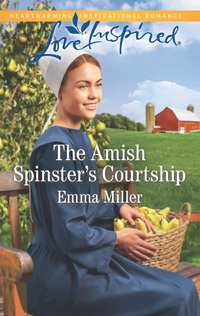
An Amish courtship no one expected...
But is he too good to be true?
To prove she has a fun side, ultraserious Lovey Stutzman accepts her sister’s dare: a buggy ride with Hickory Grove’s most handsome Amish bachelor. But what Lovey can’t accept is Marshall Byler’s claim that he fell in love with her at first sight. Now Marshall must defy everyone’s expectations—including his family’s—to prove his intentions once and for all.
EMMA MILLER lives quietly in her old farmhouse in rural Delaware. Fortunate enough to be born into a family of strong faith, she grew up on a dairy farm, surrounded by loving parents, siblings, grandparents, aunts, uncles and cousins. Emma was educated in local schools and once taught in an Amish schoolhouse. When she’s not caring for her large family, reading and writing are her favorite pastimes.
Also by Emma Miller
Love Inspired
The Amish Spinster’s Courtship
The Amish Matchmaker
A Match for Addy
A Husband for Mari
A Beau for Katie
A Love for Leah
A Groom for Ruby
A Man for Honor
Hannah’s Daughters
Courting Ruth
Miriam’s Heart
Anna’s Gift
Leah’s Choice
Redeeming Grace
Johanna’s Bridegroom
Rebecca’s Christmas Gift
Hannah’s Courtship
Discover more at millsandboon.co.uk.
The Amish Spinster’s Courtship
Emma Miller

www.millsandboon.co.uk
ISBN: 978-1-474-09620-1
THE AMISH SPINSTER’S COURTSHIP
© 2019 Emma Miller
Published in Great Britain 2019
by Mills & Boon, an imprint of HarperCollins Publishers 1 London Bridge Street, London, SE1 9GF
All rights reserved including the right of reproduction in whole or in part in any form. This edition is published by arrangement with Harlequin Books S.A.
This is a work of fiction. Names, characters, places, locations and incidents are purely fictional and bear no relationship to any real life individuals, living or dead, or to any actual places, business establishments, locations, events or incidents. Any resemblance is entirely coincidental.
By payment of the required fees, you are granted the non-exclusive, non-transferable right and licence to download and install this e-book on your personal computer, tablet computer, smart phone or other electronic reading device only (each a “Licensed Device”) and to access, display and read the text of this e-book on-screen on your Licensed Device. Except to the extent any of these acts shall be permitted pursuant to any mandatory provision of applicable law but no further, no part of this e-book or its text or images may be reproduced, transmitted, distributed, translated, converted or adapted for use on another file format, communicated to the public, downloaded, decompiled, reverse engineered, or stored in or introduced into any information storage and retrieval system, in any form or by any means, whether electronic or mechanical, now known or hereinafter invented, without the express written permission of publisher.
® and ™ are trademarks owned and used by the trademark owner and/or its licensee. Trademarks marked with ® are registered with the United Kingdom Patent Office and/or the Office for Harmonisation in the Internal Market and in other countries.
www.millsandboon.co.uk
Version: 2020-03-02
MILLS & BOON
Before you start reading, why not sign up?
Thank you for downloading this Mills & Boon book. If you want to hear about exclusive discounts, special offers and competitions, sign up to our email newsletter today!
SIGN ME UP!
Or simply visit
signup.millsandboon.co.uk
Mills & Boon emails are completely free to receive and you can unsubscribe at any time via the link in any email we send you.
“I still need to add the sugar…”
“You’re telling me,” Marshall replied. His voice came out in a strangled croak and he began to cough again.
Lovey pointed at him with her spoon. “Sorry. Though my mam did teach me to make lemonade so you could taste the lemons.”
“Did she?” He laughed. He was captivated by the pretty young woman’s eyes, her smile. “Your mam would approve of this batch for certain.”
“I am sorry,” she repeated. Then she giggled again.
Marshall watched her. “I can see I’ll have to be more careful about reading signs literally when I come in here.”
“Maybe you should.” She smiled to herself, adding the sugar to the pitcher.
He couldn’t take his eyes off her. There was something so familiar about her.
This girl wore the Amish clothing of every other local girl he knew, but there was something remarkably different, yet familiar, about her...as though he’d known her all his life. And suddenly he wanted to know her for the rest of his life.
Dear Reader,
Thank you for joining me in Hickory Grove, an Amish community just a stone’s throw from Seven Poplars in Kent County, Delaware. Rosemary and Benjamin have their hands full with their new blended family, don’t they? I suspect there will be bumps in the road, but the family’s love for each other and their faith will see them through.
I hope you enjoyed Lovey and Marshall’s story. Marshall had me worried there for a few minutes. Thank goodness his grandmother intervened. We all make mistakes sometimes and it takes a wise man or woman to accept our loved ones’ shortcomings. I think Lovey and Marshall are perfect for each other, don’t you?
I hope you’ll join me in Hickory Grove again soon. I have a wonderful story of forgiveness to share with you when I introduce Benjamin’s son Joshua to a newcomer, Phoebe. The love they find will truly warm your heart.
Until we meet again, friends.
I wish you peace and happiness.
Emma Miller
Whoso findeth a wife findeth a good thing, and obtaineth favour of the Lord.
—Proverbs 18:22
For my best friend, Judith.
Thank you for your confidence in me.
For your love.
You made me who I am.
Contents
Cover
Back Cover Text
About the Author
Booklist
Title Page
Copyright
Introduction
Dear Reader
Bible Verse
Dedication
Chapter One
Chapter Two
Chapter Three
Chapter Four
Chapter Five
Chapter Six
Chapter Seven
Chapter Eight
Chapter Nine
Chapter Ten
Chapter Eleven
Chapter Twelve
Chapter Thirteen
Chapter Fourteen
Epilogue
Extract
About the Publisher
Chapter One
Hickory GroveKent County, Delaware
Marshall Byler stepped into the shade of the concrete block dairy barn that housed the new Miller harness shop and breathed a sigh of relief. The July sun was hot and the day was muggy, just what one would expect for midsummer in Kent County and sure to make the corn grow. He’d been cultivating his corn in his east field when a groundhog had startled Toby, the younger of his two horses, and he’d spooked.
Marshall had gotten the horses calmed down before they tore up more than a small portion of his crop. However, somewhere in the frantic shying of the team, Toby’s britchen strap, a section of harness that kept the horse from getting tangled in the traces, snapped. Marshall didn’t need the harness immediately, but he decided to go ahead and drop it off for repair right away, so it would be ready when he needed it again.
Miller’s Harness Shop would save him time because it was closer to his farm than the Troyer Harness Shop, which he usually frequented. And he also liked the idea of giving his business to the new place; there was enough leatherwork to be done in Hickory Grove to support both the Troyer and the Miller families. Besides, the shop was owned by his new friend Will’s father and it seemed only right to go there.
Marshall waited a moment for his eyes to adjust to the shadowy shop with its massive overhead beams and concrete flooring. A section of the former milking stalls had been cordoned off from the rest of the barn, and the stanchions and feed trough was replaced with shelving, display space with an assortment of items for sale and a counter with a cash register.
“Hello! Anyone here?” he called. When he got no answer, he put two fingers to his lips and whistled.
Still no response.
When he and his brother had driven into the yard, they hadn’t seen anyone around. Yet the wooden sign beside the half-open Dutch door read Velcom Friends. It was long past the midday meal, so where was the proprietor? Glasses and a pitcher of lemonade stood by the cash register with a sign that read Refresh Your Thirst. Ice cubes, mint and lemon slices floated in the clear pitcher, a sight that made Marshall realize just how thirsty he was. Noticing a brass bell beside the cash register, he rang it before pouring himself a glass of the lemonade and taking a deep swallow.
Marshall gasped as the strong taste of sour lemon filled his mouth and made his eyes water. He grimaced and began to choke just as the door swung open to reveal a young Amish woman in a green dress and white kapp. He tried to clear his throat and coughed.
“Atch,” she said, and clapped a hand over her mouth to suppress a giggle. “You weren’t supposed to drink that yet.” She held up a pint jar of raw sugar in one hand and a wooden spoon in the other. “I still need to add the sugar.”
“You’re telling me,” Marshall replied. Rather, he tried to reply, but his voice came out in a strangled croak and he began to cough again.
She pointed at him with her spoon and grimaced. “Sorry. Though my mam did teach me to make lemonade so you could taste the lemons.”
“Did she?” He laughed, then choked again. When he found his voice, he spoke, captivated by the pretty young woman’s eyes, her smile. “Your mam would approve of this batch for certain.” Marshall wanted to ask her how he was supposed to know there was no sugar in the lemonade yet, but he was enjoying the back and forth too much. Instead, he wiped his eyes with his shirtsleeve. He spotted a smudge of topsoil and wished he’d taken the time to go to the house to change his shirt before coming to the shop. He also wished he’d worn his better straw hat; this one had a bite out of it, thanks to his brother’s pet goat.
The woman hurried past him, putting the service counter between them before depositing the jar of sugar beside the pitcher. “I am sorry,” she repeated. Then she giggled again.
Marshall watched her. “I can see I’ll have to be more careful about reading signs literally when I come in here.”
“Maybe you should.” She smiled to herself as she added the sugar to the pitcher and stirred with the spoon.
He couldn’t take his eyes off her. He was sure they’d never met before because he would have remembered her, but there was something so familiar about her. It was like the taste of his favorite pie. All pies were different, but blueberry had its own special flavor. This girl wore the Amish clothing of every other local girl he knew, but there was something remarkably different, yet familiar, about her...as though he’d known her all his life. And suddenly he wanted to know her for the rest of his life.
Just this morning he and his grandmother, who lived with him and his little brother, were discussing his marriage prospects. Or lack of, in her eyes. For months she’d been talking about how it was time for him to start thinking about settling down and having a family of his own. He wondered what she would think if he walked back into the house this afternoon and told her he might have found the girl for him.
The woman regarded Marshall with shining almond-shaped eyes as green as spring grass. “What can I do for you?” She eyed the leather strap in his hand.
“I’m Marshall, Marshall Byler,” he told her, deliberately stalling in explaining his reason for coming. “I live just down the road. The farm with the old pear trees by the mailbox?”
She didn’t respond.
Marshall wasn’t in the least bit discouraged. He liked a bit of chase with a girl. “And you must be a Miller?”
She shook her head and continued to stir. “Ne.”
He took a step forward and inspected her closer. She was tall for a woman, perhaps taller than he was. And slender as a willow. She wasn’t a beauty in the usual sense, not tiny and softly rounded like his neighbor Faith King. But when this newcomer turned those intense green eyes on him, he found himself almost stunned. Not to mention slightly tongue-tied. She was sharp as a straight razor, this one, and direct in her speech, more outspoken than most of the girls around here. Deliciously tart...like her lemonade.
Marshall smiled at her, a practiced expression that had caused more than a few feminine hearts to flutter. Surely, this maedle behind the counter could see his charm and recognize him for the superior fellow he was? He held up the broken strap.
She seemed not to notice his smile. Instead, all business, she left the spoon in the pitcher of lemonade and put out her hand. “Let me see what we’re dealing with.”
“You’re not a Miller?” he ventured, determined to have her name.
She accepted the piece of leather from him and scrutinized it. “This damage looks fresh.”
“Ya,” he admitted. “My gelding’s young, still green in the harness. He shied at a groundhog and caused a bit of a panic with his teammate.”
“Neither animal harmed, I hope?” she asked.
Marshall warmed to the concern in her eyes and shook his head. “Ne, both fine.” He hesitated. “You asked about the horses, but not the man?”
She lifted her head and inspected him with a new interest, or so he hoped. “You look to be in one piece, Marshall Byler.”
Then she returned her attention to the harness. “This strap has given a lot of service and the leather is near worn through here and here.” She indicated two places on the leather. “It could be fixed, but you might be better off with a new one.”
“Let’s see, if you aren’t a Miller, you must be one of Rosemary’s daughters. I’ve met two of your sisters.” He eyed her. “You don’t favor any of them, which is why I didn’t make the connection. Why haven’t I seen you at any of the singings?”
“Mended or made new?” she asked. “What will it be?”
Marshall drew himself up to his full height, bringing his eyes level with those intriguing green ones. “What’s your name?”
Her lips tightened again, and flecks of gold tumbled in the green irises. “Lovage. Lovage Stutzman.”
He rapped his knuckles on the counter. “Ah, I knew you were one of Rosemary’s daughters. She was a Stutzman before she married Benjamin, right? My grandmother is distantly related to some New York Stutzmans. What kind of name is Lovage? I never knew an Amish girl called Lovage.”
She tied a yellow paper tag to one end of his harness strap. “My mother likes herbs,” she explained. “I’m Hannah Lovage, but I’ve never used Hannah.”
He removed his straw hat and used his handkerchief to wipe his forehead. It had seemed so much cooler in the harness shop than outside, but it was definitely heating up inside. “Rosemary’s eldest daughter, then. I know your stepbrother Will. You’re the one who stayed behind to see to the sale of your mother’s property.”
She nodded, inspecting him through dark, thick lashes.
What was it about those eyes? And now that he studied her close up, something was striking about her high cheekbones, the curve of her jawline, the way her soft brown hair framed her face. Ne, perhaps she wasn’t pretty by conventional standards, but she was handsome. She was what his grandmother would call a timeless beauty. A woman who would keep her looks over the years.
“And you live here now, right?” he asked. “Your stepbrother Will said everything was settled for your mother in upstate New York. He called you Lovey.”
“Just moved in. Have you made a decision about the strap?” She held it in the flat of her palm.
“What?” He’d been concentrating so much on her appearance that he hadn’t really heard what she’d said.
“Mended or replaced with new? Your britchen strap.” She raised her eyebrows. “The reason you came to my stepfather’s harness shop?”
“Um...whatever you think.” He pressed his hands on the counter, leaning closer to her, and on impulse asked, “Lovey, would you let me drive you home from the singing this Friday night? It’s going to be at Asa King’s.”
“It’s Lovage and I would not.” She wrote his name on the tag in small, perfect print. “Come back in five business days and this will be ready.” She wrote on a receipt pad on the counter and ripped off the page.
“Why won’t you let me take you home from the singing? Have you got a steady beau?”
“Ne, I don’t have a beau. I won’t go home with you from the singing because there is no singing at the Kings. It was canceled.”
He grinned. “Fair enough.” He thought fast, unwilling to walk away without some commitment from her. “Wait, there’s a softball game Saturday night. At the bishop’s farm. How about that? Men against the women. You do play, don’t you? You look like a pitcher.”
“Catcher,” she replied. She handed him the receipt.
“So...is that a maybe you’ll let me take you home Saturday night?”
She smiled sweetly. “Ne. It is not. Thank you for your business, Marshall Byler. Now if you’ll excuse me, I’ll take this back to the workroom.”
“Will you at least think about riding home with me?” he called after her as she walked away.
She didn’t respond, but Marshall wasn’t in the least bit discouraged. She’d come around. He knew she would. The girls always did. “Nice meeting you, Lovey Stutzman. See you Saturday.” He rapped his knuckles on the wooden counter a final time.
“Lovage,” she called over her shoulder.
Marshall was still grinning when he walked out of the harness shop and back to the wagon, where Sam waited for him.
“What are you so happy about?” Sam asked, looking up at his big brother.
“I’m more than happy. I’m ecstatic, blissful, elated.” Marshall climbed up into the wagon and took the reins. “Because I’ve just met the woman I’m going to marry.”
* * *
In the workroom in the rear of Benjamin’s harness shop, Lovage stopped beside the worktable where one of her sisters was using an oversize treadle sewing machine to stitch a strap on a new halter. Ginger, twenty-three, was two years younger than Lovage and twin to Bay Laurel.
Ginger paused, glanced up at her and offered a teasing smile. “I see you met Marshall Byler.”
Lovage dropped the britchen strap on the long plank table. “It can be fixed, but you might be better off just making him a new one. Look at it and see what you think.”
Preferring harness-making to housework and minding children, Ginger had worked in Benjamin’s shop for the past three years, first in New York where they used to live and now in Hickory Grove. Her small hands were deft at fashioning leather into everything from bridles to belts to dog leashes. Ginger may have been a woman, but she’d quickly become Benjamin’s most skilled leather worker, surpassing even his sons.
“He’s cute, isn’t he?” Ginger’s green eyes twinkled mischievously. “If I’d known that was him ringing the bell, I’d have waited on him myself.”
“You know him?”
“Every Amish girl of marrying age in the county knows Marshall Byler. Wishes he’d ask her out.”
“You, too?” Lovage asked, looking down at Ginger, who was seated on a wooden stool.
Ginger lowered her gaze to her work at hand. She lifted the foot of the sewing machine, adjusted the leather and dropped the foot again. “Are you going to let him take you home after the softball game?”
Lovage gazed at her sister.
Ginger was the prettiest of the Stutzman girls, blonde and green-eyed. And she was a flirt if there ever was such a thing among Old Order Amish. Back in New York, several mothers and a matchmaker had contacted their mother inquiring as to Ginger’s availability as a possible match for their sons. Apparently, half the young men in Cattaraugus County, New York, were smitten with her. Rosemary had declared her second daughter too young to marry yet and had then whisked her off to Delaware.
“You were eavesdropping on my conversation with Marshall Byler?” Lovage asked, not even a little bit surprised.
“Maybe.” Ginger nibbled on her lower lip. “From this stool, I hear all sorts of things in the front shop. Last week I heard that Mary Aaron Troyer is trying to match her twin boys with twin sisters from Kentucky.” She shrugged. “Not sure they’re keen on the idea. Are you going to the softball game?”
“You’re certainly interested in my comings and goings.” Lovage crossed her arms over her chest, pretending to be put out with the whole discussion. The truth was she was flattered by Marshall’s attention. Though she didn’t quite understand it. Not many boys expressed interest in her. She wasn’t pretty enough or flirty enough. If a boy wanted to walk out with a Stutzman girl, Ginger was his choice every time. “And no one invited me.”
Ginger ran the length of stitch and when the sewing machine was quiet again, she said, “It sounded to me as if Marshall Byler just invited you. Everyone’s invited, anyway. It’s a neighborhood game. We’ve gone before. Sometimes boys from Rose Valley even come.” She snipped off a bit of loose thread from the halter with a pair of homemade scissors. “We play at Bishop Simon’s house. He has a good field, even a backstop. He’s nice. Jolly. And not too long-winded on Sundays. You’ll love his wife, Annie. She’ll make chocolate whoopie pies with peanut butter filling for the snack table. Wait until you taste them.” Ginger took a breath and went on without waiting for Lovage to respond. “You should accept Marshall’s offer.”
“I certainly should not.” Now Lovage was slightly peeved with her favorite sister for listening to what should have been a private conversation. Or maybe embarrassed. “I don’t even know him—don’t care to.”
“Then you wouldn’t mind if I ride home with him.” Ginger tilted her head and giggled. “Will you?”
“You’re impossible.” Lovage tried to sound vexed, but it was all she could do not to laugh at her sister’s boldness. She knew she should admonish Ginger for eavesdropping, but with four sisters, and now a houseful of brothers, who could expect privacy? It was impossible. And she could never be cross with one of her sisters for long. Certainly not over a boy. “You like all the single young men,” she reminded her.
“Most, but not all,” Ginger agreed. “Nothing wrong with liking the boys, so long as I remember everything Mam taught me about protecting my reputation.” Her sister’s amusement brought out her dimples. “I think Marshall is fun. Bay does, too. I know she’d ride home with him if he asked.”
“He thinks he’s so good-looking. Charming.” Lovage frowned, secretly wondering if she dared be so bold as to accept Marshall’s invitation. Then she asked herself, what would be the point? She wasn’t the kind of girl a boy like him would be interested in. She couldn’t fathom why he’d asked to take her home from the softball game. Was it a way to get in good with Ginger? But that made no sense, because Ginger already said she was interested in him. Marshall Byler probably knew he could get any girl in the country into his buggy.
“Marshall is good-looking. But also faithful.” Ginger carefully studied the halter she’d finished, found no flaws and set it aside. She looked up at her sister. “And you really aren’t interested in him?”
“Ne, I am not.” Lovage said it with more conviction than she felt. “I just arrived in Hickory Grove. I’m certainly not going to get involved with some fast-talking farmer my first week here. Especially not now when Mam needs my help more than ever.”
Ginger rolled the remaining thread onto the spool and tucked it into the drawer under the tabletop. “Probably just as well.” She wrinkled her nose. “Marshall’s not your type.”
“And who is my type?” Lovage rested on hand on her hip. “Ishmael Slabaugh?” she asked, referring to the young man she’d come close to becoming betrothed to.
Her sister shook her head so hard that her scarf slipped off the back of her head. “Ne, I didn’t care for him. Too serious. I’m glad you didn’t marry him. You can do better.” She removed the navy scarf and tied it over her hair again. Unruly tendrils of curly yellow hair framed her heart-shaped face, a face with a complexion like fresh cream, an unusually pretty face with practically no freckles and soft, dark brows that arched over thick lashes and large, intelligent eyes.
Envy was a sin, and only a wicked girl would be envious of a much-loved sister. But not resenting Ginger’s golden hair, rosebud lips and pert nose wasn’t easy when you were a brown-haired string bean with a too-full mouth and a firm German chin. Lovage had to remind herself to put it all into proper perspective. She, Ginger, Bay, Tara and Nettie had always been close, and having sisters that everyone called the catch of the county was her burden to bear. Aunt Jane, her dat’s older sister, hadn’t made it any easier, always pointing out that Lovage took after her plain, sensible father and not her mother with her pretty face and quirky ways.
“It’s probably just as well you don’t ride home with Marshall. You’re not suited for someone like him,” Ginger continued. “He’s looking for a fun girlfriend.”
“What? And I’m not fun?” Lovage frowned, opening her arms wide. “How can you say that? I’m fun. I like to do fun things.”
Ginger giggled. “You are a lot of things, but fun isn’t the first thing that comes to mind when I think of you. You’re strong and brave and caring. And you’re dependable. You’ve always been there for your family and anyone in need. But fun?” She wrinkled her nose. “Not so much.”
Lovage rolled her eyes.
“If anything,” Ginger went on, “you can be the opposite of fun. You never do anything that’s not comfortable for you. You never... What’s the Englisher phrase? Step out of your box? Bay and I are sure you’d have a better chance of finding a beau if you didn’t take yourself and life so seriously.”
“You’re wrong,” Lovage insisted. “I don’t have a beau because I don’t want one. And I certainly don’t want a husband. Not right now, at least.”
“Me, neither,” Ginger confided. She rose from her seat and carried the newly finished halter to a peg on the wall. “I want to go to frolics and enjoy myself for a few years. When I marry, it will be for life. Plenty of time to be serious then.”
“Mam thinks I should be looking for a husband,” Lovage mused. “Just last night when we were getting ready for bed, she reminded me that I have a birthday coming up.”
“You’ve got time. Twenty-five isn’t old age.” Ginger stood and perched on the edge of the worktable, crossing her legs at the knee and swinging a slim, bare foot. “And the sooner you marry, the sooner Mam will start thinking it’s time for Bay and me to make a match. And, like I told you, neither of us is in a hurry.”
“Goot. We agree on something.”
“But...” Ginger chuckled and shook her head. “Since you brought up the subject, I may as well have my say as chew on it like an old cow’s cud.”
“Say it then,” Lovage replied. “You know you will, anyway.”
“Okay, so maybe...” Ginger leaned forward and looked her straight in the eye. “Maybe you shouldn’t be so stubborn, and listen to someone once in a while. You know I love you more than gingerbread, and I only want what’s best for you.”
Lovage grimaced. “All right, all right. Say it and get it over with.”
“I’ve been talking to Bay and we agree. Our advice to you as the new girl is to make friends and go to the singings and the ball games and the frolics. Enjoy yourself before you settle down with a husband and babies. I’m going to the softball game. I think we all are. You should come with us. You’re a mean catcher, and we need one. Most of the girls are afraid of the ball.”
Lovage suddenly felt nervous. “What if this Marshall pesters me to ride home with him?”
Ginger shrugged. “I doubt he will.” She broke into a sassy grin. “Not when I give him my best smile.”
Lovage sighed and glanced away. A part of her wanted to go to the softball game, but this thing with Marshall suddenly seemed like so much pressure. “But what if he does?”
“Then you should go ride home with him. Like I said, you’re not his type, but it might be a good way to meet other boys. To be friendly with Marshall. He knows everyone in the county.”
Lovage crossed her arms over her chest. A part of her wanted to tell Marshall she’d ride home with him, just to prove to Ginger that she could be fun.
“Come on. I dare you to do it.” Still grinning, Ginger poked Lovage in the arm with her finger. “Tell you what, sister. If you ride home from the softball game with Marshall Byler Saturday night, I’ll take your turn at washing dishes for a whole week.”
Chapter Two
Lovage knelt on a carpet of thick moss and pulled up a few dandelions that were sprouting up beside the fish pond. “Your herb beds are coming along beautifully, Mam. I didn’t think you’d be this far along with them.” She dropped the dandelions into a bucket with the few weeds she’d already pulled. “And the waterfall is perfect for this spot. I love the sound of the water. It’s so relaxing.”
Her mother placed freshly cut sprigs of lavender in a basket and rested her large, dirt-streaked hands on her hips. “I’m so glad you’re finally here, Lovey. I’ve missed you so much. No one appreciates my garden like you do.” She studied the twenty-foot, oblong pond with its bubbling cascade, miniature lily pads, cattails and decorative rock border, and smiled. “I wish I could take credit for this, but I can’t. The pond, the Irish moss and the wrought-iron bench were already here when Benjamin brought me to look at the farm. When I walked through that gate and saw this herb garden and the flowing water, I fell in love with the place. I told him that this was the one before I even set foot in the house.”
Lovage stood up and brushed the soil off her apron. She was barefoot, as was her mother, and both wore midcalf-length dresses, oversize aprons with large pockets and wide-brimmed straw bonnets over their prayer kapps.
Lovage was pleased that she and her mother had found a few minutes to be alone, even if it was to work in the garden. As the firstborn, she and her mam had always been close, and had become more so after her mother had been widowed three years ago. Lovage had missed her mother dearly in the time they’d been apart. She’d always considered her mother her best friend, so this morning was doubly precious.
When her mother married their late father’s best friend the previous year, Lovage had remained behind in New York when her mam and her new husband, Benjamin, and all their children, had made the move to Delaware. Lovage had four sisters and a brother, and Benjamin had five sons still at home, so it had been quite an effort to move them all. While the family got settled in Delaware, their mother had entrusted her with the responsibility of selling the livestock and the farm equipment, as well as disposing of the household goods.
Blending two large families and two homes into one wasn’t done easily or quickly, and the couple had decided that a new start, a new home and a new community would give them the greatest opportunity for success. Lovage was glad to remain behind to help her mother in whatever way she could, but she’d missed the bustle of her large family and was glad when the last of the decisions were made, the final shipment of household goods was on its way to Delaware, and she was free to come.
“Smell this lavender,” her mother said, bringing her back into the present. “And see how the thyme is growing. I was afraid that it wouldn’t. But there’s more rainfall here than back home, and the pond helps. There’s a good market for dried lavender, for sachets and hanging arrangements.”
“The soil seems free of rocks,” Lovage observed.
Her mother laughed. “No rocks in Delaware. At least not down here. Benjamin says it gets a little rocky upstate near the Pennsylvania state line. This whole garden used to be fenced in for the dairy cows. I wouldn’t be surprised if my hoe took root and blossomed.”
“The cows had a pond and wrought-iron bench? I’m confused.”
“For years it was a cow pasture and then, when the English farmer retired, his wife wanted a pretty pond and an herb and flower garden. You can see someone loved and tended it. Either that or the cows wanted somewhere nice to sit.”
Lovage laughed, picturing a cow sitting on the iron bench with a gardening trowel between her hooves. “I can see that this is a wonderful spot for you. But you inherited Grossmama’s green thumb. Any plant will grow for you.”
“And you have the gift, too,” her mam replied. “It’s a true blessing.”
Lovage clasped both of her mother’s strong hands and led her to the wide iron bench with the high back and the grapevine pattern. A grape arbor arched overhead with spreading leaves and tiny green concord grapes, providing relief from the hot July sun, something they both could relish. “Sit with me,” she urged. “You’ve been on your feet since before six this morning.”
Her mother’s smile lit her green eyes. “And that’s different from every other morning in what way, dochtah?”
“It isn’t. That’s the thing. You shouldn’t have to get up so early. You have Ginger and Bay and the younger girls to help you with breakfast and the chores. And now me. I want you to take better care of yourself.”
“It’s a wonder how I managed before you got here, my love.”
“Be serious.” She caught her mother’s hand again and clasped it with affection, taking in the broken fingernails and calluses. The apple doesn’t fall far from the tree, Lovage thought with a glance at her own hands. Too bad she didn’t inherit Mam’s sunny disposition and lovely features instead of taking after her father.
She looked into her mother’s smiling face and tried to reason with her. “You have to let us help you, especially now with all these extra boys in the house. Boys needing clothes washed, eating everything that isn’t tacked down, tracking in mud and wood shavings. And now that I’m here, I’ll be able to take over a lot of your chores, just like at home in New York.”
“This is our home now.” Her mother pulled her hand free and hugged her. “And those boys are Benjamin’s sons and now my sons and your stepbrothers.”
“I know that.”
Her mam patted her cheek fondly. “Of course, I know how much you did for me both before my marriage to Benjamin and after. But...now that you’re here, things have to be different. It’s time you started thinking about yourself. About the life you’ll have separate from me—marriage, your own home, babies, God willing.”
“I told you I don’t want to talk about that.” Lovage gazed out over the garden. “My place right now is with you, helping you.”
“Oh, Lovage.” Her mother sighed. “You being my eldest, it’s natural that you feel the most responsible. But it’s time you flew the coop, my chick. Find yourself a good man and let him court you the way you deserve.”
Against her will, Lovage thought of Marshall Byler and how he had flirted with her the previous day at the harness shop. “And what if that’s not what I want?”
Her mother drew back, looking at her with true concern. “You don’t want to marry and have your own home? You don’t want a husband and children? I don’t believe that. Children are God’s greatest blessings. And His grace, of course. If any woman was born to be a mother, it’s you, Lovage.”
Lovage removed her straw hat and dropped it onto the brick walkway, letting the breeze ruffle her hair. Carefully thinking over her words before they spilled out all higgledy-piggledy, she straightened her starched white kapp and repinned the back of her hair securely. “I do want those things. It’s every girl’s dream... Her own kitchen...red-cheeked babies with sticky hands and butterfly kisses. But—”
“But nothing. If you want those things, you need a husband. And you need a partner to share the burdens of life,” her mother said softly. “A godly man who shares your faith, and will laugh with you and lend you his strength when you most need it. Don’t you want that?”
“I do want all those things someday,” Lovage assured her. “But not now. Now, I want only to be here with you, to help you through this.”
“Help me through this?” Her mother’s eyes widened in puzzlement and then she sighed. “Lovey—”
“There you are, my Rosebud,” boomed a deep male voice. Benjamin was a sturdy, fiftyish man of medium height, with rusty brown hair streaked with gray and a pleasant, weathered face with a high forehead and a broad nose under his straw hat. His full beard had a reddish cast and that, too, had begun to gray. At the moment, he was carrying a tray of assorted herb seedlings and had a twenty-pound bag of bonemeal tucked under one arm.
“I should have known to look here first.” He swung the white picket gate wide and strode into the garden. “And you with her, dochtah. What do you think of the place? I warn you, your mother had the final say. So if it doesn’t please you...” He chuckled. “You must blame her.”
Lovage’s mother laughed with him.
“Speak up, wife,” he implored. “Where do you want the bonemeal?”
She got up and went to him. “Anywhere at all, Benjamin,” she answered, taking the tray of seedlings from him.
“That’s no answer. Shall I drop it in the pond or balance it on a fence post?”
“Anywhere will do, but preferably not in the water,” Rosemary said, setting the plants on the ground. “Here.”
“She’s full of honey-do’s, this wife of mine.” Benjamin winked at Lovage conspiratorially and lowered the bag of bonemeal to the ground beside a section of newly worked, bare dirt. “You see how she treats me?” He straightened and slipped an arm around her mother’s waist.
“Go on with you.” Her mam blushed like a schoolgirl. “You’re embarrassing Lovage. What will she think of us?”
“That we suit each other like bread and honey,” he teased, wrapping his other arm around his wife.
Giggling, Rosemary tried to push her husband’s hands away, but with no great effort.
Uncomfortable, Lovage glanced away. She truly liked her stepfather, but their outrageous behavior was going to take some getting used to. She could never remember her father acting so, and she knew their marriage had been a happy one. Physical affection wasn’t something one saw often with an Amish couple. And certainly not one of their age. Both were old enough to be grandparents and Benjamin soon would be. His married daughter, Mary, was expecting twins.
“See, what did I tell you? Behave yourself in front of the children.” Still chuckling, her mother stepped out of her husband’s embrace. “Go see to your harnesses and buggy wheels and leave us in peace.”
“There now, wife, I meant no harm,” Benjamin said. “And no disrespect to either of you,” he added, looking to Lovage.
“I know that.” Lovage nodded, but avoided his gaze.
It was true. In spite of the current situation, she was pleased that her mother had found someone who obviously adored her and could provide for her. It was only natural that mixing two large families into one would require adjustment. Her aunt Paula thought her sister Rosemary had lost her mind to accept the offer of a man with six children, five under his roof.
“You must have chores of your own to do,” her mother told Benjamin.
“If you say so, Rosebud,” he agreed. “Unless you need me here.”
She smiled at him. “I do not. Now off with you, before you embarrass poor Lovage even more.” She watched him trudge away with a feigned sad expression. When the gate shut behind him, she turned to her daughter. “You mustn’t pay his silliness any mind. Benjamin is so pleased to have you with us. And you’re going to like it here,” she added.
Lovage nodded.
Leaving the home where she’d been born and grown up hadn’t been as difficult as Lovage had thought it might be. She could see that the move to a new place and a new, larger home that neither her mother nor Benjamin had shared with another spouse seemed the wisest course. It was too soon to know if she would like Delaware, but her mother clearly did. And Lovage was happy to be reunited with her sisters and mother, and her little brother.
“It seems like a good house and community,” she said. “Of course, I haven’t met the new bishop and preachers yet. Or the other families.”
“You will like them very well,” her mother said. “The sermons are short and pithy and our church members welcoming. Everyone has embraced us and they’re eager to meet you.
“Now, to get back to what we were talking about before we were interrupted,” her mother continued. “Why is it that you have set your mind against being courted by a suitable young man now? A sweet and capable girl like you. You could have your pick if you’d just—”
“Mam, please. Don’t talk like that.” She felt her cheeks grow warm. She knew what she was. Too tall, too lanky...too opinionated. But that wasn’t the point. “It’s not about me. It’s about you. A woman your age...in your condition,” she intoned.
“In my condition?” The amusement seeped from her mother’s face and her chin firmed. “I am neither sick nor so decrepit that I can’t run my own household. I’m forty-five and carrying a child. It is not an illness. It’s a natural condition for a married woman and it’s a blessing. God has given Benjamin and me another life to cherish.”
Lovage knew she blushed. To have such a conversation with her mother made her uncomfortable, but if she was determined to have it, have it they would. “A pregnancy at your age is considered high risk. I’m worried about you and it’s my duty to help you through this.”
“Goose feathers! I’m as strong as a horse.” Chuckling, she picked up the basket she’d been using to gather herbs. “You’re the one who needs help, Lovage. And I would be neglecting my duty as your mother if I didn’t see you happily wed to a good man. I think you should take that young man’s offer and ride home with him from the softball game.”
Lovage whipped around to look at her mother. “Ginger should not have told you. He wasn’t—” She knew her cheeks were burning bright. “He didn’t—Ginger should mind her own business.”
Her mother headed for the garden gate. “It wasn’t Ginger. It was Bay who—”
“How did Bay know Marshall asked me to ride home with him?” She crossed her arms obstinately. “I’m not going to, of course.”
Her mother raised her brows under her broad-brimmed hat. “Marshall, is it? Your stepbrother Will’s friend? Nice-looking young man.” She made a clicking sound between her teeth. “And from a good family. I’ve met his grandmother, Lynita. Faithful woman. Knows how to work hard and live with joy.” She opened the gate. “A good choice for a suitor, Lovey.”
“He’s not my suitor,” Lovage called as the gate swung shut, leaving her alone in the garden.
* * *
The following morning, Lovage made her way back to the garden, hoping to beat the full heat of the day. Her mother was letting out the seams on one of her dresses, and the younger girls had taken over the task of cleaning up the kitchen and starting the chicken and dumplings for the midday meal. Lovage had offered to plant the new seedlings Benjamin had bought, and to finish weeding around the fish pond.
Family breakfast had been as noisy and satisfying as Lovage remembered. She approved of her mother’s new house, especially the large kitchen with its attached, open dining room. Benjamin’s twenty-two-year-old twins, Jacob and Joshua, who were apprenticed to a cabinetmaker, had built a fourteen-foot oak trestle table. The table provided enough room for all of them to eat together and this morning her brother, Jesse, who was ten, had declared it the finest dining table he’d ever eaten at.
How she’d missed Jesse’s mischievous face in the months they’d been apart. He was brown-haired like her and her father, with green eyes, and his own special lopsided grin. That morning, Benjamin had promised to take Jesse to look at a pony for sale and the boy was so excited he could hardly sit still for grace, let alone eat his bacon and eggs. It was clear to Lovage that Jesse was very fond of his stepfather, and soon would begin to think of him as simply his dat. It made Lovage sad to think that eventually her little brother would barely remember their own father. She knew it was best for Jesse; it was just hard, no matter how much she liked Benjamin. But as her aunt Jane said, “Life moves on for the living. My brother is in heaven and beyond those earthly cares. You can’t stop change. You may as well embrace it.”
Lovage gazed out over the garden. It had rained sometime in the night, and the soil was wet. The garden smelled deliciously of mint, sage and rosemary. Finding her rhythm in planting, Lovage soon discarded the digging trowel and used her fingers. She hiked up her skirt to keep the worst of the mud off it and knelt on a folded-up burlap bag as she carefully transplanted each basil and tarragon seedling.
Herbs preferred cool weather, so July wasn’t the best time to put them in the ground, but Benjamin probably hadn’t realized that when he’d bought up the remainder of the neighbor’s greenhouse herb stock. Her mother wouldn’t have wanted to discourage him by rejecting his gift, so Lovage was determined to do her best to save the seedlings.
On her hands and knees, with her skirt hiked up, she planted most of the tray. Then, when she had to stretch to reach the last of the open area in the bed, she reached too far and slipped on the wet topsoil. She went down on both elbows, throwing dirt onto the bodice and sleeves of her dress, as well as liberally covering both arms, elbow to wrist, with wet soil. “Atch!” she exclaimed, and spat the dirt from between her lips.
“You okay?” came a male voice from behind her.
Lovage froze, not knowing who the voice belonged to, though it seemed familiar. Then, realizing what she must look like, sprawled in the herb bed, covered in mud, she scrambled to rise. “Ya,” she called, “I’m fine. I...” In her effort to get up, she succeeded only in slipping again and falling forward into the dirt again. “Oh!” As she went down, her right hand flattened a small seedling, while her elbow took out two more. That was when a pair of strong male hands closed around her shoulders and lifted her to her feet.
“You sure you’re all right?” he asked.
She whirled around. Mortified, cheeks scalding, she raised her gaze to look directly into Marshall Byler’s amused eyes. “Oh,” she breathed.
“Oh,” he said, managing, somehow, to make it sound flirty.
“What...what are you doing here?” she sputtered, taking a step back from him. Out of his arms. She glanced down at her dress and bare feet covered in dirt, and then back at him as she shoved her skirt down where it had gotten tangled in her apron. Which was now also muddy.
He grinned and offered her a big blue handkerchief from his pocket. “You’ve got mud on your forehead,” he informed her. “Right here.” He tapped his own forehead in the center. “I can get it for you if you—”
“You’ll do no such thing.” She snatched the handkerchief from him and dabbed at her forehead.
“And...and your nose,” he said helpfully, pointing.
Lovage rubbed her nose furiously with the blue fabric.
He tipped the broad brim of his straw hat as if to get a better look at her. “To answer your question, I came to check on my harness. One of your sisters sent me out here to ask you. Bay, I think?”
Lovage huffed. “I told you it would be five business days. Bay could have—” She suddenly realized that Bay had sent him out to the garden on purpose. Ginger was probably in on it. And their mother, as well, for all she knew. She blushed even harder and went back to scrubbing her nose with his handkerchief. “Bay shouldn’t have sent you out here. She could have looked up the work order. You only dropped it off two days ago.”
“A good thing for you she did send me, because I don’t think you would have managed to get up anytime today.” He grinned, indicating the wet spot in the garden. “Not the way you were slipping and sliding in that mud.” Then he laughed, the sound deep and infectious.
Lovage didn’t want to laugh. She knew that if she did, he’d take it as encouragement and continue his flirty talk. But she couldn’t help it. She looked down at her arms and dress again and began to laugh, sounding not like herself, but oddly enough, more like Ginger. “I think I would have managed,” she said, when she could talk again. “I’d have made it to my feet by noon.”
His blue eyes danced. “Suppertime at the latest.”
Still chuckling, she walked over to the pond, knelt and washed the worst of the mud off her arms. Next, she dipped her feet in, one at a time. Marshall watched as she wiped her wet hands on a relatively clean place on her apron. “Better?” she asked.
“Somewhat,” he conceded.
“Goot.” She met his gaze and it took her a moment to break free of it. “But you’ve made the trip for nothing.” She shrugged. “I told you the harness wouldn’t be done for at least five business days.”
“Ne.” He held up one finger. “I remember exactly what your words were. You told me to come back in five days. You didn’t say the harness wouldn’t be done today.”
“But it isn’t.”
He made a show of appearing sad, thrusting his lower lip out in a pout. “A pity. I need it.”
“If I could have fixed it for you, I would have, but it isn’t what I do. Ginger and my stepbrothers, they’re the harness workers. Benjamin has other work orders, people who came before you. They need their harnesses and halters and bridles, too. It wouldn’t be fair to fix yours out of turn.”
Lovage glanced back at the muddy mess of an herb bed. She’d have to salvage as many of the plants as she could. But she wasn’t about to attempt it with Marshall as a witness. She turned away and walked down the path toward the gate, hoping he would follow. Hoping he would leave.
“So...what you’re telling me is that you can’t fix my britchen strap?” he asked, following her. “Only your sister can.”
“I can’t use the sewing machine. It takes a knack. Otherwise, you just break the thread. And sometimes the needle.”
“Pity,” he said, walking two steps behind her. “You’ll be in over your head when we marry if you can’t sew.”
She stopped short, whirled around and looked at him. “What did you just say?”
“I said, if you can’t sew, it could be a problem. I’ve never known an Amish woman who couldn’t sew.” He knitted his brows. “How will you make shirts for me or baby clouts?”
“Baby clouts? Who’s making baby clouts?” She looked up at him wide-eyed, wondering if the summer heat had gotten to his head. Except that it was still morning and not all that hot out. “I was talking about harness-making. My sister is apprenticing as a harness maker. I can sew. I don’t sew leather.” She caught her breath, flustered again. “And that’s not what I meant. You’re putting words in my mouth.” She dropped her hands to her hips. “What did you say about me being in over my head?”
His smile widened. “I said you’d be in over your head when we marry if—”
“What are you talking about, marry?” she interrupted. “I don’t know you. We’re not even—” She blushed again. “We’re not even walking out together.”
“You’re absolutely right,” he said, interrupting her. “And that’s a problem. We’re not walking out yet.” He sidestepped around her and opened the gate, standing back and holding it for her. “And I think that’s important to our relationship. We should get to know each other before we take our vows. It’s the custom here in Kent County. We walk out together, court, marry. In that order.” He winked at her. “Is it different where you come from?”
“Enough.” She raised her hands, palms out. “I’m not amused by you. We aren’t walking out together. We aren’t courting. And we certainly aren’t getting married. You came to get a harness mended. I waited on you. That’s it. That’s the only connection we have.”
“Not exactly.” In an exaggerated motion with his hand, he indicated the garden behind them. “We’ve had this time together.”
“What are you talking about now?” she asked, still flustered, wishing desperately that she wasn’t. She also wished he wasn’t so handsome. That his forearms weren’t so tanned and muscular. That his smile wasn’t so...beautiful.
“And we’re neighbors,” he told her. “We have that connection.”
“We are not neighbors. You live two miles away.”
His grin widened to crinkle his entire face. Marshall had a high forehead and a dimple in the center of his square chin. With his broad shoulders and self-assured manner, he was one of the most attractive young men she’d ever met. Which made her nervous. She wasn’t used to attention from such a cute guy and she half suspected that he was poking fun at her. Because surely he wasn’t really interested in her.
Once, at a frolic when she was fifteen, a cute boy had caught her eye and she’d wanted him to notice her. She’d even broken her own rule and smiled at him, trying to flirt casually like Ginger did. It worked. The boy had noticed her, all right, but he’d only turned to a friend and whispered something she couldn’t quite make out. She had heard the word broomstick, then they’d both laughed, obviously at her. She’d cried into her pillow half the night, and she still remembered the slight painfully. Not for all the apples in an orchard would she make the same mistake a second time.
“Ah,” Marshall continued, holding up his finger to her again. “You asked someone about me. You wanted to know where I lived, which means you are interested in me.” He pointed at her. “Admit it. You like me.”
“I do not like you,” she protested.
“You don’t like me?” He opened his arms. “What have I done to deserve that? I’m a nice fellow. Ask anyone. They’ll tell you. Your brother Will likes me. He and I have become good friends.”
“Will is my stepbrother,” she corrected.
Marshall removed his straw hat and pushed back his dark hair. It was nice hair, neatly trimmed and thick. “That’s what he said when I asked him about you last night.”
He smiled at her and she felt her pulse quicken. He did have a sweet smile, a dangerous smile that made her stumble over her words and confuse her thinking.
Marshall met her gaze. “I wanted to see you again,” he said softly. “That’s why I came to check on my harness. I was hoping to see you, Lovey.”
Suddenly, the oxygen was sucked out of the air. The sound of her pet name on his lips made her throat tighten. But she liked it. She did. Marshall was teasing her again, wasn’t he? A boy like him couldn’t like a girl like her.
Could he?
“I wanted to see you and ask if you’re coming to the softball game tomorrow night,” he went on.
“Maybe,” she said quickly, still flustered. He just kept looking at her. “I...I haven’t decided yet.”
“I see.” Marshall nodded. “Well, I hope you do. And if you do, will you let me drive you home in my buggy? It’s a nice buggy...”
It had been a long time since anyone had asked Lovage to ride home in a buggy with him. So long that she didn’t know how to respond. Lovage bit down on her lower lip.
Then she heard the sound of feminine giggling. She and Marshall both glanced in the direction of a hedge of blueberry bushes and she spotted her sisters Bay, Tara and Nettie all peeking around the hedge, watching them.
Lovage quickly looked back at Marshall. He was waiting, smiling. He didn’t give a lick that they had an audience.
“Come on, Lovey.” He reached out and touched her elbow. “It’ll be fun. Say you’ll ride home with me Saturday night.”
She swallowed hard and grasped at the first answer that came to mind. “I might,” she told him. “If you’re on your best behavior.”
“I’ll take that as a yes.” Marshall walked past her, his stride long and powerful. “It’s a date,” he said, loudly enough not only for her sisters behind the blueberry bushes to hear, but possibly everyone up at the house.
“But, Marshall,” she called after him. “I didn’t say—”
“See you tomorrow, Lovey.”
All Lovage heard then was a burst of giggles from the blueberry hedge.
Chapter Three
“You want to go ahead and get Toby unharnessed?” Marshall asked his brother. The wagon had barely come to a halt in the barnyard and he pressed the reins into Sam’s hands and leaped to the ground. “Rub him down before you let him into the pasture. It’s a hot day.”
“Ya.” Twelve-year-old Sam, a carbon copy of a younger Marshall, gripped the wide leather reins with both hands, seeming to puff up with pride at being given the task. “I’ll give ’im a good rub and a scoop of grain.”
“Mind you, the harness needs to be wiped down, as well.” Marshall backed away from the wagon, clamping his hand down over his straw hat. Sounds coming from the henhouse distracted him for a moment. He could hear chickens squawking and flapping their wings. He looked back to Sam. “Give me a holler if you need any help.”
Sam eyed his big brother from under the brim of his hat, which was identical to Marshall’s. Small for his age, he sometimes struggled with the chores requiring brute strength or simply height, but he more than made up for it with heart. And smarts. If he wasn’t strong enough to do something, like lift a hundred-pound bag of feed, he’d throw together a contraption of one sort or the other to accomplish the task. He had pulleys and levers all over the barn, mechanisms he’d built himself from scraps he found around the farm or scavenged at the county dump or friends’ trash cans.
“I got it,” Sam said. He wasn’t a talker. But he was a hard worker. He was the first one up in the morning, the last to go to bed, and that was only when Marshall or their grossmammi sent him up to his room—with the warning there would be no reading. Otherwise, Sam would be up half the night scouring books and magazines on Plain ways to make work go easier on their farm.
Marshall watched Sam ease the wagon toward the drive-through shed his little brother had designed himself. It was a clever lean-to attached to the main barn, just wide enough for a horse and buggy to pull in to get out of the rain or sun. There, the vehicle, the horse and the man could stay out of the elements while hitching or unhitching. And when it was time to go somewhere, the horse could be hitched to the front of the buggy or wagon and then walk right out without having to back up. Their bishop had liked the design so much he’d built one himself at his own property, saying it would come in handy because a man with his responsibilities had to travel day or night, snow or rain.
The chickens continued to kick up a ruckus and Marshall strode across the barnyard, wondering if a fox had gotten in the henhouse. It had happened the previous year and they had lost half their layers in one night. But it was midday, nearly dinner, and not the time of day a fox was usually up and about.
As he crossed the barnyard, Marshall took in the big barn and multiple outbuildings. Every structure looked neat and tidy, all painted a traditional red with white trim: the old dairy barn, the henhouse, the smokehouse and carriage shed, the granary and other assorted structures. The dirt driveway was raked, the grass mowed and the beds of flowers weeded. And off behind the neat, white clapboard farmhouse, his garden of raised beds, rather than the rows his father had always planted, were neatly weeded. The raised beds were new this year. It had taken Sam two planting seasons to convince Marshall to make the change, but Marshall had to admit it was a good one. They were yielding more crops in a smaller space with less effort.
The sight of his little Eden made Marshall smile. He and Sam had grown up here, Marshall with both his parents, Sam with only their dat, after their mam died giving birth to him. Then four years ago, their dat died of cancer, and at the age of twenty-six Marshall had become the head of the family, responsible for his grandmother and his little brother. The transition from being the eldest son to the man of the house had been difficult at first for Marshall, especially with the transition from big brother to parent to Sam. It had put an end to his rumspringa days and nights of courting the prettiest girls in the county. But the three of them, Marshall, Sam and Grossmammi, had worked through their sorrow and come out the other side, seeing the good in the life God had given them.
The volume of the disturbance in the henhouse became louder and Marshall ran the last couple steps and flung open the door, half expecting to meet a fox with one of his chickens it its mouth. Instead, he came face-to-face with his petite grandmother, holding a basket of eggs in one hand and a flapping chicken by the feet in the other.
“Got her,” Grossmammi exclaimed, holding the chicken high in the air.
The chicken squawked and beat its wings, trying desperately to escape her grip. “Thought she’d get away with it, she did.”
She thrust the chicken upward and Marshall took a step back, raising his hands to keep the chicken from flapping its wings in his face.
He laughed. “Grossmammi, what are you doing?”
She lowered the chicken to her side, letting its head brush the dirt floor of the henhouse, but still held tightly to it. “Collecting eggs.”
He grinned at his grandmother, who stood five feet tall only when she wore her heavy-soled black shoes. Despite her short stature, she was a hearty-sized woman, round with chubby cheeks and a smile that was infectious. Several wisps of gray hair had come free from her elder’s black prayer kapp, evidence of the struggle that had apparently taken place between her and the black-and-white-potted Dominique chicken.
“I mean, what are you doing with the chicken?” He pointed.
She held it up as if she was surprised to find it in her hand. “I warned Emily, if she pecked me again, into the stew pot she went. I should have known not to buy any more Dominicker chicks. Small brains.” She lowered the chicken and looked at him. “She’ll make us a nice supper tomorrow night.”
He removed his hat and wiped his brow before returning it to his head. “And how does Emily feel about that?”
“She should have thought of that before she pecked my hand again.” She held up the hand that held the basket of eggs. “Look, she drew blood.”
He glanced at her hand, which was, indeed, bloody. “She peck you before or after you hung her upside down by her feet?” He suppressed a smile. It made his grandmother angry when she thought he was making fun of her. And an angry Lynita Byler he did not want to deal with today. He was in too good a mood.
“She drew blood, sohn,” she said, shaking the chicken. It began to flap its wings again, but with less effort. “I can’t have my own chickens pecking me!”
He smiled. Even though he was her kins-kind, her grandchild, and not her son, it had been her habit for several years now to call him her own and that somehow eased his pain of being an orphan. Even being a grown man of thirty, he found it hard sometimes to be without parents. “I see your point.” He studied the chicken for a moment. “But I’m afraid she’s going to be awfully tough. How old is Emily? Three years old? Four?”
“Old enough to know not to peck the hand that feeds her grain,” Grossmammi said indignantly.
He reached out and took the basket of eggs from her. “The other thing to take into consideration is that tomorrow is the softball game. Will says there’s talk of cooking hamburgers and hot dogs. In that case, we won’t be having supper at home. I know you don’t want to miss a softball game and potluck to eat a tough old chicken.”
She harrumphed, raised the bird high again and said, “Last time, Emily. I promise you that.” Then she lowered the old hen to the ground and Emily had the good sense to hit the ground running.
Marshall stepped aside to let his grandmother pass and closed the henhouse door behind her.
“You go to Troyer’s and get your britchen strap repaired?” she asked, watching him latch the door securely.
They crossed the sunny barnyard side by side, Marshall shortening his stride so his grandmother could keep up. She was wearing a rose-colored dress today, her bare feet dirty from work in the garden that morning.
“I went to Miller’s,” he told her. “Will’s stepfather’s harness shop. Thought it would be neighborly to go there rather than Troyer’s. Give them the business. Which is a good thing because I met the woman I’m going to marry,” he told her.
She stopped and cocked her head. She wore tiny, wire-frame glasses with lenses that darkened in the sunlight. Marshall couldn’t see her eyes now, but her tone of voice was enough of a reprimand.
“Your wife!” she exclaimed. “You’ve already courted and become betrothed? Banns going to be read on Sunday?” She started walking again and he was the one who had to keep up.
“Not moving quite that quickly, Mammi,” he said, using her nickname. “What’s the matter? I thought you’d be pleased.”
“That you’re ready to bring a wife into this house.” She nodded. “I am. A man going to be thirty-one come Christmas Eve, you should have a wife and a house full of children. God willing,” she added quickly. “Who are you talking about? One of Rosemary’s girls, I suppose? That Ginger is a flirt. You’ve always been drawn to a pretty face.”
“Not Ginger. Lovage. Rosemary’s oldest. She’s just come to Hickory Grove this week.” They cut across the grass toward the back porch. “She’s been in New York settling her mother’s affairs this last year.”
Lynita made a clicking sound between her teeth. “Lovage? What kind of a name is that?”
“Lovage is an herb,” he explained to her as they rounded one of the hickory trees his grandfather, Lynita’s husband, had planted two generations ago. They hadn’t grown naturally on the property, but there were so many in the area, Marshall’s father had told him, that Moses had dug up soldiers in the woods, planted them all around the house he built for his new wife. And now, though Grossdaddi had been dead two decades, they shaded the home where his sons and grandsons had been born and, God willing, his great-grandchildren would be born.
It was interesting to Marshall that in all his running-around years when he was in his early twenties, children had been the last thing on his mind. All he had wanted was a fast horse to pull his courting buggy and a pretty girl beside him. Marriage hadn’t been a consideration and being a father had fallen even behind that. But the last few months, he’d begun to feel a need to settle down and have a family of his own. Maybe it was his grandmother nagging him, or maybe it was God directing, Marshall didn’t know. What he did know was that Lovey Stutzman was the woman for him.
“I like Rosemary, but a bit of an odd duck, isn’t she? And marrying at her age, to a man with all those boys? Brave she is, too.” Lynita studied him through her dark glasses. “I’m glad you’re thinking about finding a good woman, but I think you’d best stay closer to home. A girl born and raised here.” She went up the porch steps.
He followed her. “Not this again, Mammi. Faith is a perfectly nice girl, but—”
“She can cook,” his grandmother interrupted. “She can sew as fine a stitch on a quilt as I’ve ever seen, and you won’t have to worry about her bringing any fancy ideas from New York. She grew up here in Hickory Grove just like you. She knows how things are done.” At the top of the steps, she took the basket from him, an egg basket she’d woven herself. “I like her name better, too.”
Marshall glanced away, grinning. His grandmother was persistent, if nothing else. She’d been touting their neighbor Faith King’s qualities since Easter Sunday, when she and Faith’s mother had talked after services and she had learned that Faith was ready to start looking for a serious suitor. Faith was young and pretty and she cooked as fine a stuffed pig’s maw as he had ever eaten. He’d give her that, but she didn’t light a spark in him. Not the way Lovey had.
He looked at his grandmother, who, standing on the porch with him still on the stairs, was nearly his height.
“Grossmammi, you know I respect your opinion, but—”
“And her father’s land meets ours to the north. Couldn’t be more convenient. Eldest girl and no sons to inherit.” She lifted her snowy-white brows. “The two farms together would make a fine piece of land someday.”
“As I was saying before you interrupted—”
“Ne, I didn’t interrupt. I’m older than you are, and wiser.” She pointed a tiny finger at him. “It’s not an interruption coming from an elder. It’s a fact.”
He chuckled, shaking his head. “You’re not marrying me off to Faith King, Mammi.” He turned and went down the steps. First, he was going to check on Sam’s progress unhitching Toby, and then he intended to work on replacing a rotting post in the grape arbor until his grandmother called them for dinner. “I appreciate your concern, but I’ll find my own wife.” At the bottom of the steps, he turned to her, opening his arms wide. “I already have.”
* * *
Lovage walked off the softball field, carrying a catcher’s mask under her arm. The community softball games were so popular in Hickory Grove that Bishop Simon not only had a ballfield on his property, but equipment: bats, balls, extra gloves and an old catcher’s mask he’d found at Spence’s Bazaar. Lovage hadn’t been to the market in nearby Dover, where Amish and Englishers sold wares and foodstuffs and shopped, but she’d heard it mentioned multiple times since her arrival in Delaware. It was a place one could find not just treasures like a used catcher’s mask, but also handmade items like quilts and wooden crafts, deli sandwiches, homemade cakes and doughnuts and pickles and preserves.
“Nice game,” one of the young men, John Mary Byler, who had played third base on her team, said as he walked by. He was with Lovage’s stepbrothers Jacob and Joshua, who were identical twins. With matching haircuts, even knowing them her whole life, Lovage had to listen to their speech patterns to identify which was Jacob and which was Joshua. Their eldest brother, Ethan, said they purposely tried to do things exactly the same way, copying each other’s gestures and such to confuse people purposely for fun.
Lovage nodded and looked down at the ground, feeling self-conscious. John Mary hadn’t wanted her on his team; it had been obvious from the look on his face when Bishop Simon had divvied them up. She supposed this was his way of apologizing, now that he knew she could play softball pretty well, but he still made her feel uncomfortable. Or maybe it was his cousin Marshall Byler who was making her nervous. Marshall had played for the other team, but had kept up a running dialogue with her the whole afternoon, complimenting her on every good throw she made from behind the plate and assuring her she’d get the next one if she missed a strike thrown to her. He was the pitcher for the other team. And now the game was over and families were packing up to go home to tuck little ones into bed. Young men and women of courting age were beginning to break into groups or even pairs to spend an hour together—chaperoned, of course—before they went home.
“Thirsty?” Marshall seemed to come out of nowhere to walk beside her across the grass toward the area where families were packing up the leftovers from the cookout potluck. In the distance, she could see her mother filling one of their three picnic baskets while speaking to Jesse. Benjamin was shamelessly putting covers on food dishes and handing them to her as if every fifty-year-old Amish man cleaned up after supper.
“I’m sorry. What?” Lovage glanced at Marshall. They were the same height, something she hadn’t noticed at the harness shop the other day. She was a tall woman and he wasn’t a tall man. Not that that mattered to her. In fact, she liked being able to walk beside him and look him eye-to-eye. Or she would if he wasn’t making her so nervous, meeting her gaze, holding it every time she looked his way.
“Would you like something to drink? There’s some of my grossmammi’s lemonade left. I’m partial to it. She adds a little fresh squeezed orange juice to it. And plenty of sugar, unlike someone else I know,” he joked.
She kept walking, trying not to laugh, because it would only encourage him. In the last couple hours, she’d gone back and forth half a dozen times trying to decide if she was brave enough to ride home with Marshall or not. A part of her wanted to because, against her will, she found she liked him. Not only was he fun to be around, always laughing and joking, but he was also such a kind man. Not self-centered like so many single men. He gave out compliments freely and seemed endlessly supportive, even to those members of his team who obviously couldn’t play softball.
And he was the most handsome man on the field. Or at least she thought he was. He wore the same clothing all of the other eligible young men wore: homemade dungaree pants, a short-sleeved shirt and a straw hat. But there was something about him that made her a little light-headed when she was able to steal a glance at him when he wasn’t looking. Maybe it was how tightly his sleeves fitted around his biceps, or the way his hair met his neckline, plain to see when he’d thrown aside his hat early in the game to make a play at home plate.
The other reason she was seriously considering riding home with Marshall was because of Ginger’s dare. Not having to do dishes for a week was very tempting. But it was more than that. Ginger didn’t think she’d ride home with Marshall alone in his buggy. She didn’t think Lovage was brave enough. Or fun enough. Ginger said Lovage wasn’t the kind of girl Marshall would ever be interested in.
What if she proved her wrong?
“Would you like to stay a little while?” Marshall asked. “Before we head home? Sometimes there are games for the singles after families head out. Singing and such.”
She glanced at him. “At home that was more for the younger couples.” The minute the word couples came out of her mouth, she blushed profusely and looked away. She couldn’t believe she’d just said that, suggesting they were in any way a couple. “I...I didn’t mean—”
“That I don’t like to have fun because I’ve reached the ancient age of thirty?” he asked. His tone was teasing.
“That we’re a couple,” she blurted, knowing her face must be bright red.
He slid his hands into the front pockets of his pants thoughtfully. “I don’t mind if you tell people we’re courting, Lovey.”
Her eyes widened. “We are not courting, Marshall Byler. I...I don’t even know if I’m riding home with you.”
“Sure you are. I already spoke with your mother and Benjamin about what time they’d like to see you home. She makes a mean strawberry-rhubarb tart, your mam.” He smacked his lips together. “I think it would put my grandmother’s to the test.”
“You asked my mother for permission to drive me home?” Lovage asked indignantly.
“Not really. I think you and I are both old enough that we don’t need permission from our elders. We know our own minds. I was just chatting with them, letting them know they’ll be seeing more of me, now that you and I are courting.”
“We are not courting!” she told him. “I don’t even know you.”
He stopped and tilted his head, looking at her. “Are we going to do this again, Lovey?” He gave an exaggerated sigh. “This is how we’re going to get to know each other. Learn each other’s likes and dislikes and such.” He frowned. “I don’t even know what your favorite color is.”
“Blue,” she said, before she caught herself.
He grinned. “Blue, of course. I would have guessed that. Blue because of my eyes.”
“Blue is not my favorite color because—” She groaned in frustration. She would have liked to have said he was conceited, but he came off not as conceited but as the most confident young man she’d ever met. Which made him the total opposite of her. Lovage was definitely not confident, particularly around men.
He started walking and she walked with him, mostly because she didn’t know what else to do. Her gaze strayed to her family gathered at the picnic tables under the hickory trees. Her mother and Benjamin had passed the baskets to her brothers. They’d be in their two buggies soon, headed home. If Lovage was going with them, she needed to say so.
“So that’s a no on staying for the games?” Marshall went on. “In that case, we can take the long way home. I have a courting buggy, you know. A cozy two-seater.” He winked at her. “I like your way of thinking, Lovey.”
“Marshall,” Lovage said, so rattled she couldn’t even speak.
Just then, two young women in pretty rose-colored dressed walked past them. They were Ginger’s age and pretty, with freckled noses and blond hair. Sisters, Lovage guessed.
“Nice game, Marshall,” the taller of the two cooed.
The other giggled. “We got here late, otherwise we could have played on your team, Marshall,” she said.
Marshall grinned. “Thanks. You should definitely join us next time.”
Lovage cut her eyes at him. These girls were openly flirting with him! And he was flirting back. And—and it made her angry because she was walking with him. He had asked her to ride home with him. And she could be fun. She could flirt.
Maybe.
Gripping the catcher’s mask in one hand, Lovage turned to Marshall. “Yes,” she blurted, so nervous that it came out too loud. Too forward.
“Ya?” He looked at her, his blue eyes twinkling in a way that made Lovage feel a little woozy.
“Yes, I’ll ride home with you. I just...” She walked away from him. “I have to talk to my parents.”
“Sounds like a plan.” He was smiling now. Smiling at her. “I need to make sure my little brother and grandmother are set to go, anyway.”
Lovage had learned from Ginger that Marshall’s grandmother lived with him and that he had been caring for her and his little brother since their father passed away a few years ago. Lovage had to admit, at least to herself, that the idea that he was being a father to his twelve-year-old brother was evidence of what a truly good man he was.
“Meet you at the picnic tables in a few minutes?” Marshall asked. “We’ll say goodbye to everyone, thank the bishop and his wife for having us and then go.”
Lovage nodded as she hurried away.
“See you in a few minutes, Lovey!” he called after her.
Darmowy fragment się skończył.